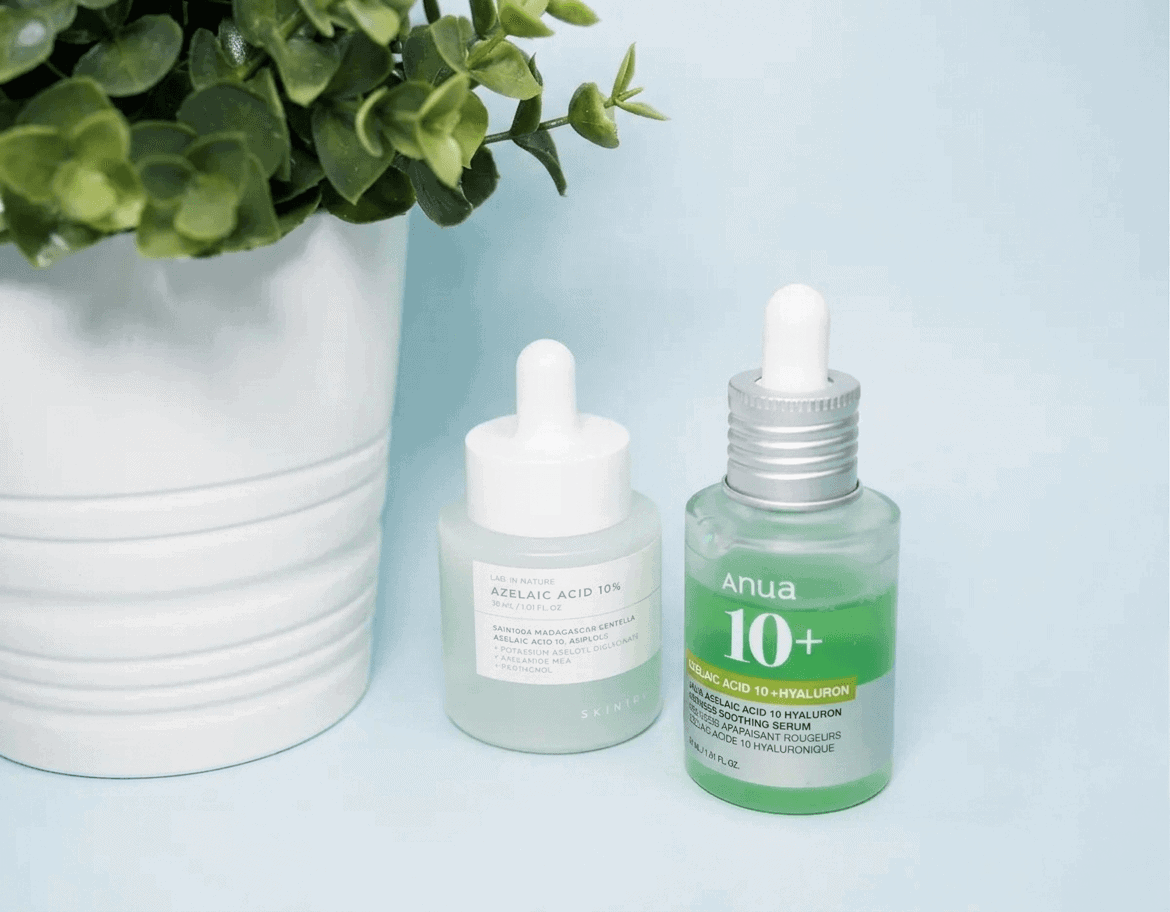
So. The Skin1004 azelaic acid finally arrived.
I’d already bought the Anua one, used it, written a whole post about it (verdict: fine, it’s fine, very decent, not the holy grail TikTok promised me), and then immediately ordered the Skin1004 version because apparently I can’t stop buying things and I was curious. The Skin1004 one is £12.99. The Anua is £22.00. Both are 10% azelaic acid. Both are K-beauty. Both are marketed at sensitive, redness-prone skin. On paper they’re basically doing the same job. But the formulas are actually pretty different once you get into them, and the difference matters if you’ve got a specific skin situation going on.
I’ve got type 1 rosacea, ocular rosacea, seborrhoeic dermatitis, and Malassezia concerns. My skin is basically a committee that votes against every new product I try. So when I say one of these works better for me than the other, I mean it in a very specific, very chaotic way.
I’m also doing a full YouTube video comparing these two side by side, so if you want the visual version of this chaos, subscribe to my channel here and it’ll land in your feed.
Quick Answer: Anua vs Skin1004 Azelaic Acid
Skin1004 (£12.99) wins for rosacea, seb derm, and Malassezia-prone skin – it’s cleaner, lighter, and more focused. Anua (£22) wins if you need to tackle acne, pigmentation, and a compromised barrier at the same time. Same 10% azelaic acid percentage, very different formulas, very different use cases. Both fragrance-free.
Buy fromWhere to buy each one
Skin1004 Azelaic Acid 10 Ampoule
Anua Azelaic Acid 10 Hyaluron Serum
- Lookfantastic, code LFTFNEVEEN
- Olive Young, code NEVEEN20 for up to 10% off
Every shop that stocks them, with all my codes, is further down the post.
Table of Contents
First, a quick recap on why I even use azelaic acid
If you read my Anua azelaic acid review, you already know this bit. Skip ahead if you want. But for anyone new here: azelaic acid is one of the few ingredients that genuinely earns its spot in a rosacea routine. It’s anti-inflammatory, antimicrobial, helps with pigmentation, and has a mild keratolytic effect that keeps texture and clogged pores in check. For seb derm, the antimicrobial side helps keep flares calmer. It’s not glamorous. It doesn’t have a cult following on TikTok the way niacinamide does. But it quietly does a lot.
10% is the max you can get without a prescription in the UK. Both of these are 10%. So on the active ingredient front, they’re identical. What’s different is everything else in the bottle.
(Worth flagging while we’re here: 10% is the over-the-counter ceiling, but it isn’t the ceiling full stop. Higher strengths are prescription-only in the UK, as is tretinoin, which is the route I ended up going down for my own skin in the end. I’ve written that whole thing up in my Dermatica tretinoin review, including how I buffer prescription actives so my rosacea doesn’t stage a protest.)
(If you’re dealing with seborrhoeic dermatitis on top of rosacea – same chaotic boat as me – my seb derm face vs scalp breakdown is a good place to start working out what you’re actually dealing with.)
The full ingredient lists
Right. The lists. Because I’m the kind of person who buys a product, uses it for a month, and then reads the ingredient list at 11pm going “hang on, what’s Hydroxypropyl Cyclodextrin and why does it matter.” And this is where it got interesting.
Anua Azelaic Acid 10 Hyaluron Redness Soothing Serum – Full INCI
Aqua (Water), Disodium Azelate, Propylene Glycol, Dipropylene Glycol, 1,2-Hexanediol, Panthenol, Azelaic Acid, Hydroxyethylcellulose, Betaine Salicylate, Glycerin, Biosaccharide Gum-1, Ethylhexylglycerin, Allantoin, Dipotassium Glycyrrhizate, Melia Azadirachta Leaf Extract, Camellia Sinensis Leaf Water, Sodium Hyaluronate, Melia Azadirachta Flower Extract, Niacinamide, Aloe Barbadensis Leaf Juice, Beta-Glucan, Centella Asiatica Extract, Centella Asiatica Leaf Extract, Centella Asiatica Root Extract, Madecassoside, Asiaticoside, Asiatic Acid, Madecassic Acid, Squalane, Zinc PCA, Butylene Glycol, Pentylene Glycol, Caprylyl/Capryl Glucoside, Hydrogenated Lecithin, Ceramide NP
Bold = ingredients worth paying attention to for rosacea/seb derm skin. 35 ingredients total.
Skin1004 Madagascar Centella Azelaic Acid 10 Ampoule – Full INCI
Water, Azelaic Acid, Hydroxypropyl Cyclodextrin, Disodium Phosphate, Pentylene Glycol, Propanediol, Potassium Azeloyl Diglycinate, Maltodextrin, Azelamide MEA, Panthenol, Butylene Glycol, 1,2-Hexanediol, Glycerin, Ethylhexylglycerin, Allantoin, Centella Asiatica Extract, Melia Azadirachta Leaf Extract, Biosaccharide Gum-1, Sodium Hyaluronate, Melia Azadirachta Flower Extract, Beta-Glucan, Centella Asiatica Leaf Extract, Phellinus Linteus Extract, Tocopherol, Citric Acid, Sodium Citrate, Glycyrrhiza Glabra (Licorice) Root Extract
Bold = the 3X azelaic complex that makes this formula different. 27 ingredients total.
What each one has that the other doesn’t
What Anua has that Skin1004 doesn’t
Niacinamide. And this is a big one. Brightens, helps with pores, regulates sebum, supports the barrier – niacinamide is one of the most well-researched ingredients going and Anua just chucks it in there alongside the azelaic acid. For free, basically. Skin1004 has nothing like it. (Small caveat: if you’re niacinamide-sensitive – some people find it triggers breakouts – do a patch test first before going all in.)
Zinc PCA. Specifically good for oily and acne-prone skin. Regulates sebum, has antimicrobial properties. Skin1004 skips it entirely, which makes sense given it’s not going for the acne angle at all.
Ceramide NP. This is the one I keep coming back to. It’s not just a soothing ingredient – it’s actually rebuilding. Ceramides are part of your skin’s natural lipid structure, and when your barrier is shot, they help put it back together. Skin1004 has zero ceramides. Zero. And I think that’s the biggest single difference between these two products. Not the price. Not the texture. That.
Squalane. Lightweight, skin-identical, Malassezia-safe. A nice supporting ingredient. Skin1004 hydrates through humectants instead, which is fine – just different.
Betaine Salicylate. A gentler BHA derivative – mild exfoliation, helps with clogged pores. Great for acne-prone skin. Rosacea skin can be more sensitive to anything with exfoliating properties though, which is why this is the ingredient I keep flagging for very reactive skin types. Skin1004 doesn’t have it, and that’s honestly part of why it wins for rosacea.
Hydrogenated Lecithin and Caprylyl/Capryl Glucoside. I’m grouping these because they’re the two ingredients that come up in strict fungal acne conversations about Anua. Neither is a disaster for most people – I’ve used the Anua without issues. But if you’re very deep in the FA rabbit hole and avoiding these specifically, Skin1004 is the cleaner call. Neither is in Skin1004 at all.
A much bigger Centella complex. Anua uses seven separate cica-related ingredients – Centella Asiatica Extract, Leaf Extract, Root Extract, plus isolated actives Madecassoside, Asiaticoside, Asiatic Acid, and Madecassic Acid. Skin1004 uses two. Both have Centella. Anua has significantly more of it. Honestly? I’m not convinced more automatically means better here. But if you’re a cica fan, Anua is the clear winner on that front.
What Skin1004 has that Anua doesn’t
Potassium Azeloyl Diglycinate (PAD). This is the interesting one. PAD is a water-soluble azelaic acid derivative – it inherits the brightening and anti-inflammatory benefits of azelaic acid but dissolves easily, which helps both the texture and how well it delivers. There’s research linking it specifically to rosacea management and melanin reduction, which got my attention. And combined with the 10% azelaic acid and Azelamide MEA, Skin1004 technically delivers 11.5% total azelaic activity. I did a double take when I worked that out. You’re buying something labelled 10% and getting 11.5% total azelaic load. That’s not nothing.
Azelamide MEA. The second derivative. Helps with sebum control and skin feel. There’s less research behind it than PAD, which I’ll be honest about – I can’t tell you exactly how much it’s contributing. But it’s in there, doing something with the sebum side of things, and it’s not in the Anua at all.
Hydroxypropyl Cyclodextrin. This is the clever bit – and the reason the Skin1004 texture makes sense. Raw azelaic acid is notoriously difficult to formulate. It doesn’t dissolve in water or oil, which is why high-percentage azelaic products so often feel gritty and draggy and end up abandoned in a drawer. Cyclodextrin encapsulates the azelaic acid – little molecular buckets, basically – and solubilises it so the whole thing spreads as a lightweight watery ampoule rather than a paste. Actual formulation engineering. Not marketing fluff. Anua doesn’t use it, which explains a lot about the texture difference between the two.
Phellinus Linteus Extract. A mushroom extract with antioxidant and anti-inflammatory properties. Niche, not something you see much. Anua doesn’t have it.
27 ingredients vs Anua’s 35. Eight fewer things for your skin to potentially throw a fit about. That’s not nothing when you’ve got reactive skin that reads ingredient lists like a threat assessment.
What they both have
For all the differences, there’s a solid shared core. Both use Centella Asiatica, Sodium Hyaluronate, Beta-Glucan, Panthenol, Allantoin, Biosaccharide Gum-1, Melia Azadirachta Leaf and Flower Extract, Ethylhexylglycerin, and Licorice Root Extract. Both are fragrance-free and alcohol-free. So you’re not choosing good vs bad here – and that’s actually the annoying thing, because it’d be much easier to just tell you one is rubbish. They’re both decent. They’re just built for genuinely different skin situations, and figuring out which one is yours is the whole game.
The formulas are genuinely not the same thing
This is the part that surprised me, honestly. I went in expecting two very similar products with slightly different vibes. What I got was two products with pretty different formulation philosophies.
The Anua is a multitasker. It’s got niacinamide in there, zinc PCA, ceramide NP, squalane, a full Centella complex, and betaine salicylate (a gentler BHA derivative). It’s doing a lot. Redness, acne, pores, barrier repair, hydration – it’s going for all of it at once. Which I genuinely respect. It’s the skincare equivalent of someone who shows up with a spreadsheet and a backup plan.
The Skin1004 is doing something different. It uses what they call a 3X Azelaic Active Formula, meaning alongside the 10% azelaic acid it also contains Potassium Azeloyl Diglycinate (PAD) and Azelamide MEA – two azelaic acid derivatives that help improve stability, redness reduction, and skin feel. Think of it as azelaic acid showing up with two assistants. The rest of the formula is clean and light: Centella, licorice root, panthenol, allantoin, beta-glucan, hyaluronic acid. There’s no betaine salicylate. No ceramides. No niacinamide doing its own side quest. It’s just: here’s the azelaic acid, here are some calming ingredients, off you go.
| Feature | Anua – £22 | Skin1004 – £12.99 |
|---|---|---|
| Azelaic Acid | 10% | 10% + 1.5% derivatives = 11.5% total |
| Azelaic derivatives (PAD + Azelamide MEA) | No | Yes |
| Cyclodextrin delivery system | No | Yes |
| Niacinamide | Yes | No |
| Zinc PCA | Yes | No |
| Ceramide NP | Yes | No |
| Squalane | Yes | No |
| Centella | 7-ingredient complex | 2-ingredient (still decent) |
| Betaine Salicylate (mild BHA) | Yes | No |
| Licorice Root | Yes | Yes |
| Fragrance-free | Yes | Yes |
| Total ingredients | 35 | 27 |
| Texture | Richer gel serum | Lightweight watery ampoule |
Texture: this is where they really split
The Anua one – and I said this in my review – is not as thin as TikTok promised me. It’s a gel serum. It’s not heavy, but it has presence. It sits on the skin for a minute before absorbing. On some people it apparently pills under SPF, though that hasn’t been my specific experience. If you’ve got drier skin or a compromised barrier, the texture is actually quite comforting. It feels like something’s happening.
The Skin1004 is properly watery. Like, watery watery. It absorbs instantly. There is almost nothing to it in terms of feel, which sounds like I’m saying it’s bad – I’m not. For oilier skin types, for anyone who layers a lot of products, for anyone who’s ever had an azelaic acid pill or roll up under SPF, this texture is a genuine relief. It just disappears. (The cyclodextrin encapsulation is actually what makes that possible – it solubilises the azelaic acid so you’re not getting that classic gritty paste situation that plagues a lot of high-percentage azelaic products.)
Which is better for rosacea?
Look, they’re both fragrance-free, both alcohol-free, both have anti-inflammatory stuff in them. I’m not going to tell you either of these is going to destroy your face. But for actually reactive rosacea – type 1, flushing, the kind that throws a fit when you look at it wrong – I think Skin1004 edges it, and the reason is pretty specific.
Betaine salicylate is a gentler BHA derivative, not a harsh exfoliant by any means. But rosacea skin can be prickly about anything with exfoliating properties. For most people it’s absolutely fine. For skin that throws a tantrum at the slightest provocation, it’s one more thing to watch.
Skin1004 doesn’t have it. Skin1004’s formula is essentially just: calm everything down, reduce the redness, don’t introduce anything extra. That’s a very sensible approach for type 1 rosacea specifically.
My completely unscientific rosacea ratings: Skin1004 is probably a 9.5/10. Anua is an 8.5/10. Both good, one slightly less likely to cause a problem.
Which is better for seb derm and Malassezia?
This is where Skin1004 pulls further ahead, and honestly it surprised me.
The Skin1004 formula is unusually clean from a seb derm standpoint. No fatty oils, no shea, no problematic esters, no ferments, no rich lipid systems. It’s got tocopherol (vitamin E) very low in the list, which some Malassezia-obsessed people will flag, but in terms of the overall formula it’s about as safe as you’re going to get from an azelaic acid product. Skincarisma confirms zero fungal acne triggers in the Skin1004 list. That’s genuinely rare for an active serum.
The Anua contains hydrogenated lecithin and caprylyl/capryl glucoside. Neither of those is a disaster – I’ve been using the Anua without issues – but if you’re a fungal acne purist or your skin is particularly reactive to those ingredients, Skin1004 is the cleaner option. Anua I’d give a 7.5 to 8/10 for fungal acne safety. Skin1004 is a 9.5/10.
(Trying to work out whether ingredients are seb derm safe is a whole exercise in itself. I use the Seb Derm Directory as my own reference point – it covers everything I’d actually recommend for seb derm skin.)
Which is better for the barrier?
Anua. Clearly Anua.
There were a few days in winter when my barrier was in a genuinely bad state – tight, slightly raw, the kind of skin that makes you paranoid about putting anything on it – and I reached for the Anua because it’s got ceramide NP, squalane, and hydrogenated lecithin actually doing repair work. Not just soothing. Repairing. The Skin1004 keeps things comfortable with glycerin and beta-glucan and panthenol, and honestly that’s plenty most of the time. But when things are actively broken, it’s not quite enough. Anua wins that one.
So which one do I actually think is better?
Here’s my honest take, with the caveat that my skin situation is very specific and yours might not need the same things.
For my skin – type 1 rosacea, ocular rosacea, seb derm, Malassezia concerns, on the drier side, mature – the Skin1004 is the safer bet. It’s gentler, cleaner, less likely to cause a problem, and it does the one job I actually need it to do (reduce redness and keep skin calm) without introducing extra actives my face might complain about. The fact that it’s also nearly half the price is almost annoyingly convenient.
But. The Anua is genuinely good if you’ve also got acne, pigmentation, or barrier issues to deal with alongside redness. It’s doing more work. It’s more of a Swiss-army-serum. If I had oilier, acne-prone skin with rosacea thrown in, I’d probably reach for Anua. The niacinamide and zinc PCA are doing real things for pores and sebum that the Skin1004 just doesn’t have.
So. Easily overwhelmed skin, reactive skin, skin that has opinions about everything: Skin1004. Skin that can take a bit more and needs to actually do multiple things at once: Anua. That’s genuinely the whole thing.
Where to buy both, and the discount codes for each
Both are available from several K-beauty retailers that ship to the UK. I’ve got discount codes for most of them – see my full discount code hub for everything in one place. Partner codes below – small commission earned at no cost to you.
Skin1004 Azelaic Acid 10 Ampoule
- Stylevana – use code INF10NEVE for up to 25% off (shop here) | full Stylevana code page | is Stylevana legit?
- YesStyle – use code NEVEEN15 for an extra 2% to 5% off, stackable with their own coupons (shop here) | YesStyle influencer code NEVEEN15
- Skinsider – use code NEVEEN15 for 15% off (shop here) | full Skinsider code page
Anua Azelaic Acid 10 Hyaluron Redness Soothing Serum
- LOOKFANTASTIC – use code LFTFNEVEEN (shop here) | full LOOKFANTASTIC code page
- Sephora UK – no code needed (shop here)
- Olive Young – use code NEVEEN20 for up to 10% off (shop here) | Olive Young promo code NEVEEN20
- Stylevana – use code INF10NEVE for up to 25% off (shop here) | full Stylevana code page
- Skinsider – use code NEVEEN15 for 15% off (shop here) | full Skinsider code page
FAQ: Anua vs Skin1004 azelaic acid
Is Skin1004 or Anua azelaic acid better for rosacea?
Skin1004 edges ahead for most rosacea types – especially type 1 – because it has no exfoliating actives (no betaine salicylate) and a simpler, calmer formula. Anua is also rosacea-friendly but has more actives in the mix, which suits skin that needs to address acne or pigmentation at the same time.
Is Skin1004 azelaic acid safe for seborrhoeic dermatitis?
Yes – it’s one of the cleaner azelaic acid options for seb derm. No fatty oils, no ferments, no problematic esters. Tocopherol appears low in the ingredient list but the overall formula is about as Malassezia-safe as azelaic acid products get. Skincarisma flags zero fungal acne triggers, which puts it around 9.5/10 for fungal acne safety. The Anua sits nearer 7.5 to 8/10, because of hydrogenated lecithin and caprylyl/capryl glucoside.
What is the difference between Anua and Skin1004 azelaic acid?
Both are 10% azelaic acid, but they’re built for different problems. Anua is the multitasker, adding niacinamide, zinc PCA, ceramide NP, squalane and betaine salicylate so it works on acne, pores and barrier repair alongside redness. Skin1004 is the focused one: two azelaic derivatives, cyclodextrin encapsulation for a much lighter texture, a shorter ingredient list and nothing extra beyond calming.
Can I get azelaic acid stronger than 10% in the UK?
Not over the counter. 10% is the maximum available without a prescription in the UK. Higher-strength azelaic acid is prescription-only, as are retinoids like tretinoin. Online prescription skincare services such as Dermatica are one route, where a dermatologist reviews a consultation and prescribes a personalised formula.
Where can I buy Skin1004 azelaic acid in the UK?
Is Skin1004 azelaic acid good?
For my skin, yes. I rate it 9.5/10 for rosacea and 9.5/10 for fungal acne safety, and at £12.99 it’s nearly half the price of the Anua. It’s a watery ampoule that absorbs instantly, it’s fragrance-free and alcohol-free, and the two azelaic derivatives mean you’re getting 11.5% total azelaic activity rather than the 10% on the label. What it won’t do is repair a damaged barrier or tackle acne and pigmentation, since it has no ceramides and no niacinamide. That’s what the Anua is for.
Which is better value, Anua or Skin1004?
On price alone it’s Skin1004 at £12.99 against Anua at £22. But value depends on what you need it to do. If redness is your only concern, Skin1004 does that job for less. If you’re also dealing with acne, pigmentation or a damaged barrier, the Anua is doing several jobs at once, and buying separate products to cover those would cost you more than the £9 difference.
What is Potassium Azeloyl Diglycinate (PAD) and why does Skin1004 use it?
Potassium Azeloyl Diglycinate (PAD) is a water-soluble derivative of azelaic acid. Because raw azelaic acid doesn’t dissolve well, PAD makes it easier to deliver azelaic activity in a light, elegant formula. It has its own brightening and anti-inflammatory benefits and there’s research specifically linking it to rosacea management. Skin1004 uses it alongside Azelamide MEA and 10% azelaic acid to create a total 11.5% azelaic complex. Anua doesn’t use either derivative.
More if you’re dealing with seb derm or rosacea skin
- The Anua Azelaic Acid Serum Review: Fine. It’s Fine. – my full solo review of the Anua, start here if you only care about one of them
- My Dermatica Review: Why It’s My Only Source Now (Plus How I Buffer It for Rosacea) – if over-the-counter actives aren’t cutting it and you’re wondering about the prescription route
- Seborrhoeic Dermatitis on the Scalp vs Face: Why They’re Different and What Helps Each – the full explainer if you’re still figuring out what you’re dealing with
- The Seb Derm Directory: Scalp and Hair Products That Actually Help (UK Edition) – every product I’d recommend for seb derm, including safe moisturisers and serums
- 6 Malassezia Safe Moisturisers That Don’t Feel Like Grease – for the face moisturiser side of things
- All my beauty discount codes – Stylevana, YesStyle, Skinsider, Olive Young and more in one place
Get my discount codes by email
I send one email a week with whatever I’ve just published, and my current discount codes sit right at the top of it. Free, and you can unsubscribe any time.
Some links in this post are affiliate links, meaning I may earn a small commission if you buy through them, at no extra cost to you. I bought both of these products myself.
Google will show you more of my posts when you search, AI answers included. One tap, and you can undo it any time.