Table of Contents
TikTok made me buy it
TikTok did it to me again.
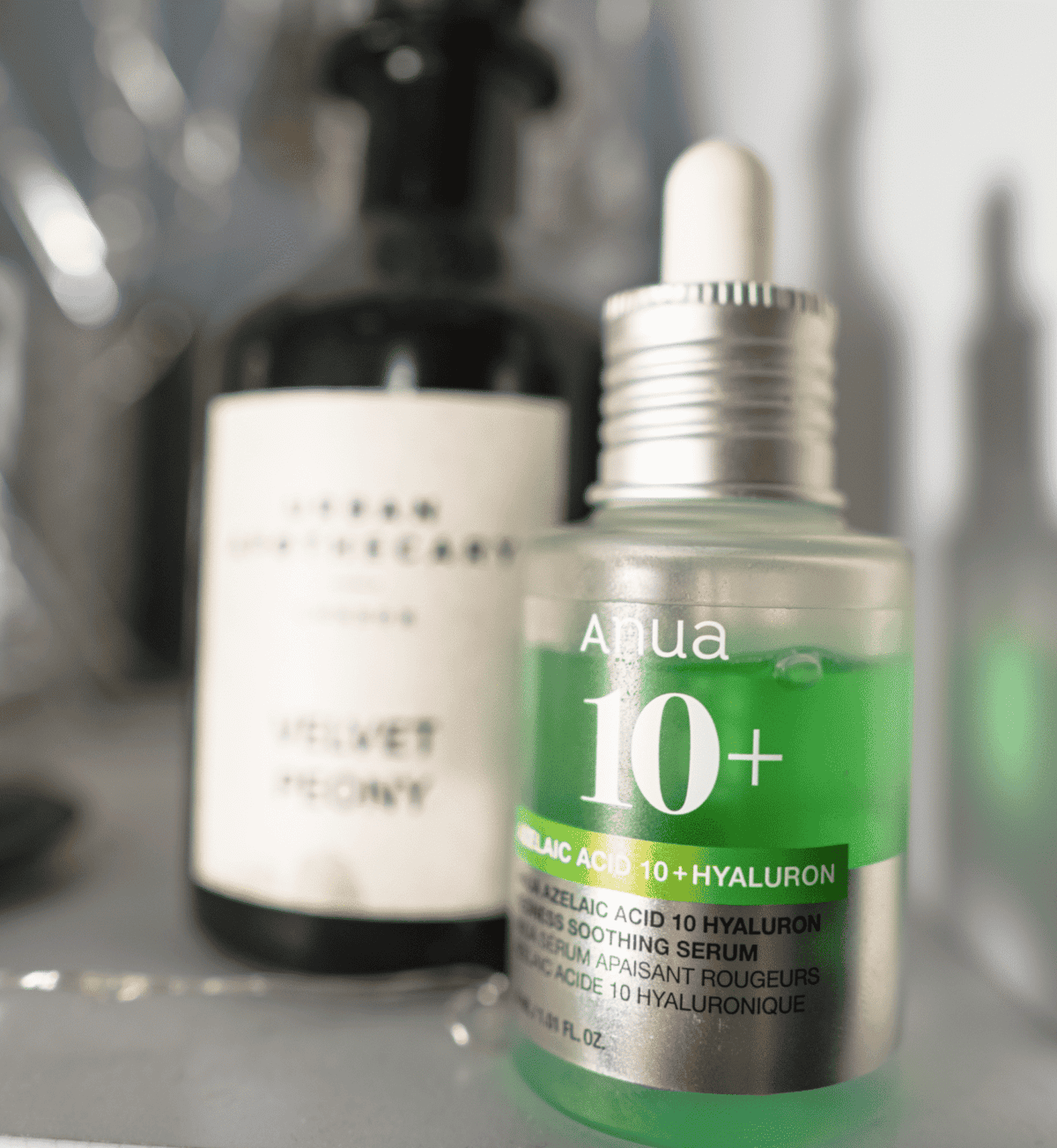
I’d been watching reviews of the Anua azelaic acid serum stack up for months. Review after review after review, all saying the same thing: it’s so thin, it’s so lightweight, it just disappears into your skin. And I thought, yes. That’s exactly what I need. Something that layers nicely, doesn’t pill, doesn’t sit heavy. I’ve got a lot going on in my routine and I don’t need another product that makes itself known in a bad way.
So I bought it. With my own money, just to be transparent about that. (The link in this post is an affiliate link, but the product? Paid for it myself.)
I should explain where I’m coming from on azelaic acid. I’ve been using it on and off for a while now, and I have opinions. Strong ones. I have type 1 rosacea, which means azelaic acid is basically a permanent fixture in my routine, it’s not optional for me. The Dermatica version is genuinely good. Like, properly good, in a way that I notice immediately when I stop using it. I’ve also used the Paula’s Choice azelaic acid, which is honestly brilliant, but the price is a big fat expensive nope and I haven’t gone back to it in a while because I refuse to justify that spend when there are other options out there. So I’m always on the lookout for something that does the same job without making me wince at the checkout.
Which is how I ended up with the Anua one.
The texture was not what I expected
Everyone on TikTok was very emphatic about the texture. So thin. So watery. Basically evaporates. And I went in expecting something that would feel like practically nothing on my skin.
That is not what happened.
It’s not thick. I want to be clear, it’s not uncomfortable or heavy or anything like that. But it’s noticeably more substantial than I was expecting based on absolutely every review I watched before buying it. It just sits there a bit more than the TikTok girlies led me to believe it would. Maybe it’s my skin type. Maybe it’s layering order. Honestly, I’m not entirely sure. But that slight heaviness (relative to my expectations, not in absolute terms) has nagged at me every time I’ve used it.
Does it actually work?
Yeah, actually. It does. My skin looks decent, there’s no irritation, no drama, and it plays nicely with the rest of my routine. I’ve had no issues layering SPF or makeup over it either, which for a morning azelaic acid is genuinely one of the most important things. It’s a solid azelaic acid. I might even repurchase it. I just don’t think it’s the holy grail that TikTok has made it out to be, and if you go in expecting some miracle weightless experience, you might feel a bit like I did. Pleasantly fine. Which is not the same as blown away.
It’s a decent option. It’s just not my favourite option.
I’ve actually added it to my ‘products I love’ section alongside the Dermatica azelaic acid, because with rosacea I’m always going to need an azelaic acid in my life and right now those two are my go-tos. Both worth trying. One just happens to have better PR.
I’ve since tested the Skin1004 azelaic acid alongside this one – and I wrote up the full head-to-head if you want to know how they actually compare. Spoiler: same 10%, very different formulas, and a clear winner for my specific skin chaos. You can read it here: Anua vs Skin1004 Azelaic Acid: I Tested Both So You Don’t Have To.
Why I use azelaic acid in the first place
Quick sidebar for anyone who’s new to azelaic acid, because it’s one of those ingredients that doesn’t get half the hype it deserves. I use it specifically because of my type 1 rosacea and because I also deal with seborrhoeic dermatitis on my face, and azelaic acid is genuinely one of the few ingredients that pulls weight for both.
Here’s what it actually does. It’s anti-inflammatory, so it helps calm the redness and flushing that comes with rosacea. It’s antimicrobial, which is useful for the bacteria side of things. It helps with pigmentation and uneven skin tone. And it has a mild keratolytic effect, meaning it helps with texture and keeps pores from getting clogged. For seb derm specifically, the antimicrobial and anti-inflammatory properties help keep things calmer between flares. It’s not a cure for either condition, nothing is, but it’s one of those ingredients that genuinely earns its place in a routine.
How do I use it? Every morning after cleansing, before moisturiser. And in the evenings I alternate – azelaic acid one night, tretinoin the next. I’m not putting them on together because that’s just asking for an angry face, and my skin’s had enough of those. If you’re new to azelaic acid, start a few times a week and build up from there. It can tingle a bit at first, especially if your barrier’s not in great shape. That usually settles. And SPF in the morning is non-negotiable when you’re using any active, azelaic acid included.
The 10% concentration in the Anua serum is the max you can get over the counter in the UK. (Anything higher is prescription only, which is what you get through Dermatica.) For most people managing rosacea or seb derm, 10% is a perfectly reasonable starting point.
Ingredient breakdown
For reference, here’s the full INCI as listed on the UK packaging (via Boots). Always worth checking the current packaging before you buy, because formulas do get updated.
Aqua (Water), Disodium Azelate, Propylene Glycol, Dipropylene Glycol, 1,2-Hexanediol, Panthenol, Azelaic Acid, Hydroxyethylcellulose, Betaine Salicylate, Glycerin, Biosaccharide Gum-1, Ethylhexylglycerin, Allantoin, Dipotassium Glycyrrhizate, Melia Azadirachta Leaf Extract, Camellia Sinensis Leaf Water (green tea), Sodium Hyaluronate, Melia Azadirachta Flower Extract, Niacinamide, Aloe Barbadensis Leaf Juice, Beta-Glucan, Centella Asiatica Extract, Centella Asiatica Leaf Extract, Centella Asiatica Root Extract, Madecassoside, Asiaticoside, Asiatic Acid, Madecassic Acid, Squalane, Zinc PCA, Butylene Glycol, Pentylene Glycol, Caprylyl/Capryl Glucoside, Hydrogenated Lecithin, Ceramide NP.
A few things worth flagging in there. You’ve got 10% azelaic acid as the main active (listed here as both Disodium Azelate and Azelaic Acid, which is just two forms of the same ingredient). Niacinamide for brightening and barrier support – worth knowing that niacinamide is in here, so if you’re someone who’s sensitive to it or finds it breaks you out, patch test this one first or just swerve it entirely. Sodium hyaluronate for hydration. A big old hit of Centella Asiatica (cica) in multiple forms, which is brilliant for calming irritated skin. Beta-glucan for soothing. Zinc PCA which helps with sebum regulation. Ceramide NP for barrier repair. And Squalane, which is one of the few oils that’s safe for Malassezia-prone skin, so good news if you’re managing seb derm. Honestly it’s a well thought out formula. I have no complaints about what’s in it. My only complaint is the texture versus the expectations that were set for me by the internet.
Where to find K-beauty (including Anua)
If you want to try this or anything else from the K-beauty world, here are the places I actually buy from. I’ve got codes for most of them – full list at neveenwood.com/discount-codes.
- Olive Young – code: NEVEEN20 (shop here)
- Stylevana – code: INF10NEVE (shop here)
- YesStyle – code: NEVEEN15 (shop here)
- Skinsider – code: NEVEEN15 (shop here)
- Dermatica – codes NEVEEN50 (50% off first 3 months) or NEVEEN15 (15% off Routine Essentials) (shop here)
- LFTFNEVEEN for up to 25% off skincare and haircare (shop here)
All five are legit, I use them regularly, and they’re your best bet for getting K-beauty in the UK.
FAQ
Is the Anua azelaic acid serum good for rosacea?
It’s a decent option for rosacea-prone skin. Azelaic acid has anti-inflammatory properties that make it useful for rosacea, and the Anua serum didn’t cause any irritation or flare-ups. That said, it’s not the most impressive azelaic acid serum out there. The Dermatica azelaic acid is a stronger performer if rosacea management is your main goal.
Is the Anua azelaic acid serum really that thin and watery?
TikTok would have you believe it’s basically water. In reality it has more texture than the reviews suggest, at least on some skin types. It’s not thick or heavy, but it’s noticeably more substantial than the “it disappears instantly” reviews imply. Results may vary depending on your skin type and routine.
How does the Anua azelaic acid compare to Dermatica?
The Dermatica azelaic acid is the stronger performer. It’s a prescription-strength option and the results are more noticeable, especially for rosacea and pigmentation. The Anua one is a decent over-the-counter alternative at a lower price point, but it doesn’t hit the same level.
Where can I buy Anua skincare in the UK?
The easiest places to buy Anua in the UK are Olive Young Global (code NEVEEN20), Skinsider (code NEVEEN15), Stylevana (code INF10NEVE), YesStyle (code NEVEEN15), and Lookfantastic (code LFTFNEVEEN for up to 25% off). All five ship to the UK and are reliable.
Should I use azelaic acid if I have type 1 rosacea?
I’ve got type 1 rosacea and azelaic acid is a permanent fixture in my routine, so I’d say yes. It’s anti-inflammatory and antimicrobial, and it’s one of the most recommended ingredients for rosacea for exactly that reason. It won’t cure anything, but it keeps the redness and the flares calmer. Start a few times a week rather than daily, because it can tingle at first, especially if your barrier isn’t in great shape.
Is the Anua azelaic acid serum worth buying?
It’s a decent azelaic acid serum and worth trying, especially at its price point. It works, causes no irritation, and layers well under SPF and makeup. Just go in with realistic expectations rather than TikTok expectations. It’s a solid option, not a miracle product.
Can I use azelaic acid if I have seborrhoeic dermatitis?
Yes, and I do, because I’ve got seb derm on my face as well as rosacea. The antimicrobial and anti-inflammatory side is what does the work. It won’t replace an antifungal when you’re actually flaring, but it keeps things calmer in between, and it sits fine alongside an FA safe routine.
What percentage of azelaic acid can you get without a prescription in the UK?
In the UK you can buy azelaic acid up to 10% concentration over the counter. Anything higher than 10% requires a prescription, which is available through services like Dermatica.
More on managing seb derm skin
If the seb derm angle of this post is what brought you here, these go alongside it:
- Anua vs Skin1004 Azelaic Acid: I Tested Both So You Don’t Have To – the full comparison, including which one is better for rosacea, seb derm, and Malassezia skin
- Seborrhoeic Dermatitis on the Scalp vs Face: Why They’re Different and What Helps Each – the explainer post, start here if you’re still figuring out what you’re dealing with
- The Scalp Care Routine I Actually Stick To (And I’ve Tried a Lot) – every product in my scalp routine and why
- The Seb Derm Directory: Scalp and Hair Products That Actually Help (UK Edition) – the full product directory for your scalp and hair
- 6 Malassezia Safe Moisturisers That Don’t Feel Like Grease – for the face moisturiser side of things
Get my discount codes by email
I send one email a week with whatever I’ve just published, and my current discount codes sit right at the top of it. Free, and you can unsubscribe any time.
I bought this product myself. Some links in this post are affiliate links, meaning I may earn a small commission if you buy through them, at no extra cost to you.
Google will show you more of my posts when you search, AI answers included. One tap, and you can undo it any time.