Last updated: October 2026
I shaved my head in July.
If you’ve been here a while you already know that bit (sorry, I do talk about it a lot). I’m growing everything back from zero, and my hair grows slowly. Watching-paint-dry slowly. So I’ve become the person who reads the fine print on anything that promises to speed it up.
And red light therapy is everywhere right now. It started with LED face masks and now there’s an LED something for your head too. Which leaves one big question sitting there. Does any of it do anything, or are we all paying hundreds of pounds to sit on the couch glowing red like a lava lamp?
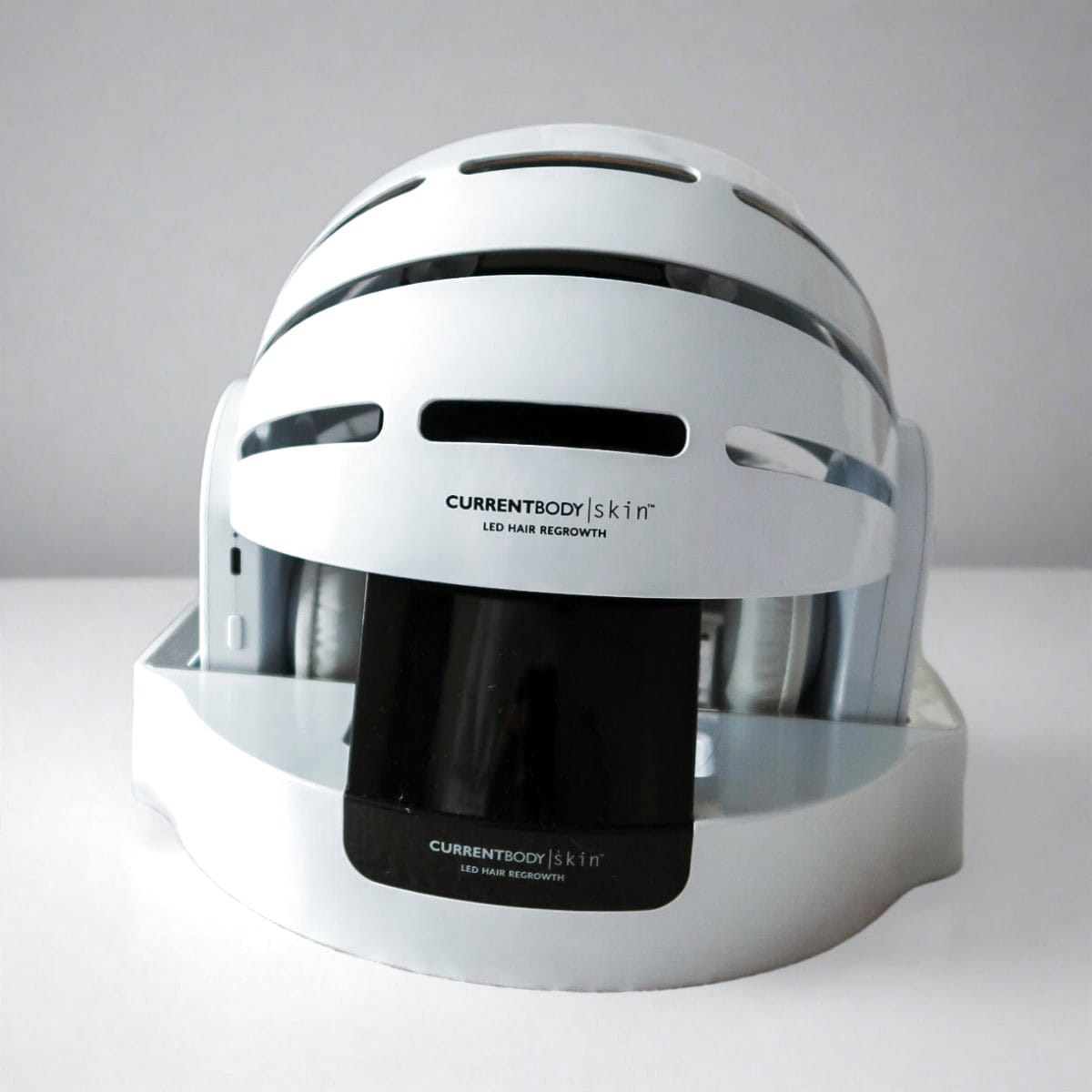
The CurrentBody LED Hair Growth Helmet is the one I ended up trying myself. It’s one of the best-known at-home devices made just for hair loss and it’s FDA cleared. It’s also £649.99 on CurrentBody UK, which is a lot of money to put on your head, so alongside using it I went and read what the research actually says.
At a glance
The CurrentBody LED Hair Growth Helmet is an at-home red light therapy device for androgenetic alopecia (female and male pattern hair loss). It has 120 red LEDs in the 620-660nm range covering the whole scalp, and each 10-minute session switches itself off. It is FDA cleared under 510(k) K230336 for specific patterns of androgenetic alopecia in men and women. CurrentBody’s own plan is one session a day for 16 weeks on a clean, dry, product-free scalp. It comes in Medium (54 to 58.9cm head circumference) and Large (59 to 63.5cm). Research on low-level light therapy backs it for pattern hair loss, and the evidence for other types of hair loss is much thinner. CurrentBody and Amazon UK sell it in the UK, and Amazon US sells it in the States. My code NEVEEN takes 10% off at CurrentBody. I bought it myself and have used it for two to three months, with a tiny amount of new growth so far, alongside the other treatments in my scalp routine.
Buy the CurrentBody helmet▾
Table of Contents
What the CurrentBody LED Hair Growth Helmet actually is
It’s a helmet – a hard one, with lights inside.
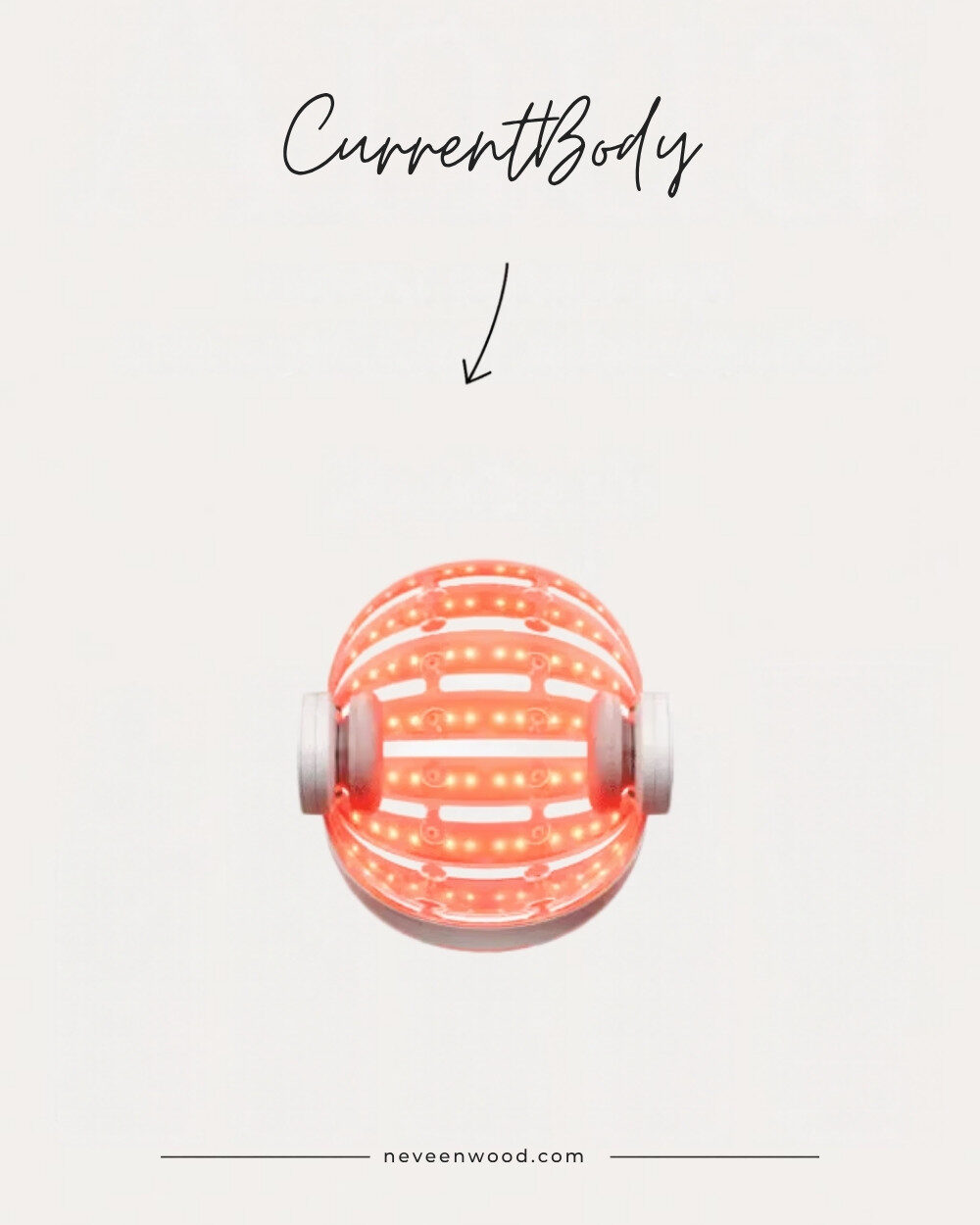
Serums go on your scalp. This doesn’t. It shines red LED light at your scalp and follicles instead, 120 LEDs spread around the inside so the whole head gets covered rather than one patch. You pop it on, and ten minutes later it switches itself off.
That ten minutes is the bit that got me, honestly. If something wants 45 minutes of my evening, it’s living under the bed by week three and I’ll feel guilty every time I see the box. Ten minutes I can do.
It’s hands-free too, so you’re not holding anything against your head and trying to remember which bit you’ve already done. And it has Bluetooth headphones built in, so I put music on while it runs. Every time my husband spots me wearing it, he starts humming the X-Men theme and shouting “get out of my head, Charles”. If you know, you know.
Does red light therapy work for hair loss?
Short version: for pattern hair loss, there’s real research behind it. For everything else, a lot less.
Red light therapy also gets called low-level light therapy or photobiomodulation (three names for one thing, because of course).
The science bit, in plain English
Right now the leading theory is that red light gets absorbed by an enzyme called cytochrome c oxidase, which sits in the mitochondria, the parts of your cells that make energy. That seems to nudge the cell into making more ATP, which is basically cell fuel. This review of how light therapy works lays it out, and it’s upfront that scientists still haven’t fully pinned down the mechanism. CurrentBody’s own pitch is that the extra energy keeps hair in its growth phase for longer.
A 2025 systematic review and meta-analysis looked at 38 studies with more than 3,000 people across different kinds of alopecia. Most of them had androgenetic alopecia, and in that group low-level light therapy significantly increased hair density compared with placebo. They also said the evidence for other types of hair loss is much weaker. An earlier review of FDA-cleared home devices pooled seven double-blind trials and found more hair density with the real devices than with fake (sham) ones, for men and women, and for comb and helmet designs.

That split matters a lot. If your hair loss comes from something else, like a deficiency or a medication, a helmet isn’t treating the cause. I had to push my GP for a long time before anyone took mine seriously, and I’d still tell anyone to get the why before they spend on a what. If you’ve just been given a name for it, this is the post I wish someone had given me.
The 84-day study, and how I’d read those numbers
CurrentBody quotes an independent 84-day Intertek study on 31 people aged 24 to 54 with mild to moderate hair loss or thinning. Everyone used the helmet once a day for 10 minutes on a clean, dry scalp. The results they report, all statistically significant:
- 123.1% increase in hair growth rate
- 72.3% reduction in hair loss
- 26.1% increase in hair density
- 37% improvement in visual hair density
- 96% increase in hair thickness
- 60.8% reduction in scalp oil
Those are big numbers. And it’s 31 people over about three months.
I wouldn’t call them meaningless, I just wouldn’t read 123% and expect my own head to do anything close to that. Hair growth is slow, and where you start makes a huge difference. I read those figures as a sign the tech has potential, and I’m keeping my expectations for Christmas very low.
How long does it take to see results?
Months. Sorry.
The study measured at 84 days and CurrentBody’s own plan runs to 16 weeks of daily sessions. Across the wider research on light therapy, treatment runs from several weeks to several months, so it’s a long game, and I’d give it three to six months before judging anything.
Take photos before you start, in the same light and with your hair parted the same way every time. Your bathroom mirror will lie to you, because hair looks completely different depending on the light and how oily it is that day.
My experience with the CurrentBody helmet so far
I bought the helmet myself and I’ve been using it for two to three months now, and yes, I’ve noticed a little bit of growth. When I say little, I mean TINY.
I have androgenic alopecia, and I wasn’t expecting to throw on a helmet and have mermaid hair a week later. This device is going to take time.
It also isn’t the only thing in my scalp rotation, which matters if you’re reading this to decide whether the helmet works. I’m trying a few scalp serums, and two days ago I started oral treatment through my Hair + Me subscription, so whatever my head does over the next few months, I can’t hand all the credit to the helmet (or all the blame).
What I’m hoping is that the mix lets me grow enough hair to get back to my toppers. Unless I get lucky and go full Rapunzel. Fingers crossed.
Is the CurrentBody helmet comfortable?
It’s a hard, structured bit of kit. One buyer review on Sam’s Club says hair got caught around the headphone area and came out when they took it off, and CurrentBody’s advice back was to tie hair back and check the helmet wasn’t too big. So fit is going to come down to your head size and your hair.
To pick a size you measure around your head with a soft tape, just above your eyebrows and over the tops of your ears. Medium is 54 to 58.9cm and Large is 59 to 63.5cm. You’re also meant to do a sensitivity test before your first full session, and I’d do it.
Clean, dry scalp (and if you wear a topper or wig)
This one’s easy to miss. CurrentBody’s own instructions say your hair should be clean, dry and product-free before each session, and the study did the same.
So no dry shampoo or scalp oil first – if you’re spending this much, you want all of that light reaching your scalp.
And if you wear a topper or a wig, it comes off for the ten minutes. Light needs to reach skin, and a lace base gets in the way. For me right now that means ten minutes a day with the wig off. Topper wearers should keep an eye on the clip spots anyway, and I’ve written up what years of clipping in taught me.
What I like about it
Ten minutes a day is realistic for a real person with a real life, and the whole scalp gets done at once, so you’re not dragging a little light around your head trying to remember where you’ve been.
Low-level light therapy has published research behind it for androgenetic alopecia, and that’s the first thing I look for now after years of working my way through the hair fall serum shelf. The helmet is FDA cleared through the 510(k) route under K230336, for promoting hair growth in specific patterns of androgenetic alopecia on Fitzpatrick skin types I to IV. For anyone weighing up a topical instead, my hair growth ingredient checker grades which ingredients have evidence behind them, and my Hair + Me review shows what goes into a custom formula.
What gives me pause
The price. £649.99 is a serious amount (my code NEVEEN takes 10% off at CurrentBody, which helps), so make sure the device matches your type of hair loss before you buy it.
The evidence isn’t a guarantee. 31 people is a small study, and the wider research is stronger for pattern hair loss than for anything else. If your hair’s shedding and you don’t know why, I wouldn’t assume LED will sort it.
It only works if you use it. The whole thing is built on daily sessions over weeks and months. So alongside does red light therapy work, there’s a second question. Will I do this every day long enough to find out? Would I still be doing it in month five? Honestly, I don’t know. I’d like to think so.
The warranty. It’s an electronic device at £649.99, so I’d keep the warranty paperwork somewhere I can find it.
Who I think it’s for (and who it isn’t)
I think it makes most sense if you:
- have androgenetic (pattern) hair loss
- have thinning rather than completely smooth bald patches
- want something at home with no needles and no appointments
- don’t want to put a topical on every day
- can stick with ten minutes a day for months
- have the budget for a £600+ device
Who I wouldn’t hand it to is anyone with sudden or unexplained shedding. Work out why that’s happening first. Throwing £650 at a helmet and hoping isn’t a plan. I say this as someone who has thrown money at plenty of things and hoped, and I’ve written about what happened after I came off minoxidil if you want the long version.
My verdict on the CurrentBody LED Hair Growth Helmet
Red light therapy for pattern hair loss has real evidence behind it, and the helmet covers the whole scalp with 120 LEDs at a wavelength that matches that research. That’s why I’m giving it a go on my own androgenic alopecia, along with how easy it makes doing it every day, and I’m taking the 123% with a big pinch of salt.
So this is my take. If you know your hair loss is the pattern kind and you’ll keep up ten minutes a day, I think this is one of the more sensible things you can spend on. If you don’t know why your hair is going yet, don’t buy this first.
For me the best thing about it is how simple it is, with nothing to book and nothing messy going on your scalp. The hardest thing is that it’s a lot to spend on something that still doesnt work for everyone.
Because hair doesn’t hand out overnight results just because we spent £650 on a helmet.
Where to buy the CurrentBody LED Hair Growth Helmet in the UK and US
Buying it in the UK
UK: CurrentBody is the one I’d use, and my code NEVEEN takes 10% off there (it works on anything on their site, not just the helmet). It’s straight from the brand, so returns and the warranty sit with the people who made it. All the details are on my CurrentBody discount code page. UK: Amazon stocks it too if you’d rather order there.
Buying it in the US
US: Amazon carries the same helmet, so if you’re in the States that’s your link rather than the UK ones above.
Whichever you pick, measure first. It comes in two sizes and they’re separate listings.
Shop my helmet pick hereMy ShopMy collection for this reviewFAQ
Does the CurrentBody hair growth helmet actually work?
For pattern hair loss, the research on red light therapy is encouraging, and CurrentBody’s own 84-day study reported a 123.1% increase in hair growth rate. It was 31 people, though, so I’d treat that as the best case.
How long does the CurrentBody helmet take to show results?
The study measured at 84 days, and CurrentBody’s own plan is daily sessions for 16 weeks. I’d give it three to six months of daily use before deciding, and take photos in the same light from day one.
Is the CurrentBody LED helmet FDA approved?
It’s FDA cleared, which is a different process from FDA approved. It went through the 510(k) route under K230336 for promoting hair growth in specific patterns of androgenetic alopecia in men and women.
What size CurrentBody hair growth helmet do I need?
Measure around your head with a soft tape, just above your eyebrows and over the tops of your ears. Medium fits 54 to 58.9cm and Large fits 59 to 63.5cm.
Can you use the CurrentBody helmet with a hair topper or wig?
Take the topper or wig off first. The light needs to reach a clean, dry scalp without a base or a layer of product in the way.
Does red light therapy work for female hair loss?
For female pattern hair loss (androgenetic alopecia), a 2025 meta-analysis found low-level light therapy increased hair density compared with placebo. The evidence for other causes of hair loss is much weaker.
How often do you use the CurrentBody LED hair growth helmet?
Once a day for ten minutes. It switches itself off at the end of each session.
Is there a CurrentBody discount code?
Yes. My code NEVEEN takes 10% off anything at CurrentBody, the helmet included. It doesn’t work on Amazon. Here’s how to use it.
Affiliate links, I earn commission if you buy through them. I’m also a Hair + Me ambassador.
Google will show you more of my posts when you search, AI answers included. One tap, and you can undo it any time.