Last updated: October 2026
I noticed my rosacea when I was a teenager. I’m 43 now. So this red face and I go back a long, long way.
If you’re typing “does rosacea get worse with age” into Google at 1am, hi. I get it. You’re not asking how to cure it anymore (you gave up on that one ages ago, same as me). You just want to know if the next twenty years are going to be redder than the last twenty.
So here’s my answer, from the other side of a couple of decades. My facial rosacea and the flushing didn’t get worse with age. But I collected plenty of visible broken capillaries along the way, and my ocular rosacea, the eye kind, did get worse as I got older. So “does it get worse?” turned out to be a yes and a no at the same time.
I also went and read the research instead of trusting TikTok. Here’s what I found, plus what I actually do about it.
At a glance
Rosacea does not get worse with age for everyone, but it can. The NHS says rosacea cannot be cured and can get worse if it is not treated, and the National Rosacea Society says new symptoms can appear years after it first starts. In my case the flushing stayed the same, while broken capillaries and eye symptoms got worse. I have type 1, the flushing kind. Type 2 also brings acne-like bumps and spots. Perimenopause is a common time for flare-ups. What helps most is daily SPF 30 or higher and a gentle, fragrance-free routine built around calming actives like azelaic acid and niacinamide. If your eyes are sore or gritty, see your GP. You can check any product in my free rosacea ingredient checker before you buy it.
Table of Contents
Does rosacea get worse with age? Here’s what the research says
The NHS is pretty blunt about it. Rosacea can’t be cured, but treatment from a GP can help control the symptoms, and it can get worse if it’s not treated.
What “worse” looks like follows a pattern. The first signs are redness across your nose, cheeks, forehead and chin that comes and goes, usually for a few minutes at a time. As it progresses, the skin can stay red all the time, and tiny broken blood vessels can appear that don’t go away. The NHS also lists thickened skin, mainly on the nose, which usually shows up after many years.
So is there an age where it just… stops? The National Rosacea Society says not really, and that new signs and symptoms may develop years after rosacea first starts. That’s exactly what happened to me. Same flushing, new problems.
Now the weird bit. Studies often find fewer older people with rosacea. One study the NRS wrote about found the highest rate, 4.5%, in the 25-44 age group, dropping to 2.9% in people aged 45 to 64 and 0.9% in those 65 and older. Sounds like good news, right?
Except a 2025 Finnish study looked at older adults in person. A dermatologist checked 552 people, about 25% of them had rosacea, and only 7% of those had ever been diagnosed. Those researchers think the constant redness and visible blood vessels of rosacea can get mistaken for normal signs of aging.
So my honest read? Left untreated, bits of rosacea tend to creep. And the older you get, the easier it is for everyone (you and your doctor included) to shrug it off as “just your skin now.”
How rosacea can change as you get older
It doesn’t change the same way for everyone, and getting worse isn’t a given. Going by the British Association of Dermatologists, rosacea is a long-term condition that fluctuates from mild to severe. Symptoms can wax and wane over your whole life too, says the National Rosacea Society.
The change I’d watch for most is redness that stops going away. Flushing that used to come and go can turn into redness that’s there all the time, which is how the NHS describes rosacea getting worse. Long-term inflammation weakens blood vessel tissue, according to the NRS, so the vessels can end up permanently dilated and visible on the skin’s surface. That’s the broken capillary thing, and I’ve got a whole section on it below.
Dryness creeps in too. Skin thins and dries over time, and one dermatologist the NRS spoke to explained that this can make rosacea redness look more obvious. Rosacea skin is touchy to begin with anyway. The face is often sensitive and can feel hot or sting, in the BAD’s own words.
Why rosacea can feel worse in your 40s
This is the bit that made me sit up, because it’s exactly my age group.
The National Rosacea Society published a piece on perimenopause this month. It says research is limited, but recent studies point to perimenopause as a time of both more new rosacea and worse symptoms for people who already have it. Hot flashes, or hot flushes if you’re in the UK like me, are a big part of that, because the heat and flushing can aggravate rosacea. The same piece links declining estrogen with dryness, a weaker skin barrier and skin that gets irritated more easily, which might explain why a cream you’ve used for years can suddenly start to sting.
That lines up with an older NRS survey, where 21 percent of the women who responded said menopause had triggered flare-ups.
Then there’s the sun. Sunlight is on the NHS list of common rosacea triggers, and by your 40s you’ve had decades of it.
Will mine change through menopause? I don’t know. I’d be guessing, and I’d rather tell you that than pretend.
The broken capillaries I collected along the way
If my flushing stayed the same, the broken capillaries were the thing that didn’t. They just… built up. Quietly. One here, one there.
The one I notice most sits right beside my lip – and I know exactly where it came from. Back in the Clarisonic craze, I scrubbed my face with one like it owed me money. Way too hard, way too often, on skin that was already reactive (that’s on me, not the brush). Learned my lesson there.
These days I go gentle. The American Academy of Dermatology advises people with rosacea to use a mild, rosacea-friendly cleanser instead of soap and to apply it gently with their fingertips. Fingertips. That’s it. I wish someone had told me that at 25.
And the annoying bit is that no serum I know of makes an existing broken capillary disappear. According to the British Association of Dermatologists, redness and dilated blood vessels can be treated with laser therapy. Lasers and IPL are usually private treatments, and they don’t switch rosacea off. And because the underlying rosacea is still there, the NRS notes that laser treatment may be needed again one to three years after a course. Lasers and lights do help with the vessels themselves, though. Per the AAD, most patients see a 50% to 75% reduction in visible blood vessels after 1 to 3 laser or light treatments, and results tend to last 3 to 5 years, though new vessels can still form.
I’m trying IPL for the first time soon, so I’ll come back and update this post once I’ve had it done.
So prevention is the cheap part. Wear SPF and go gentle, which is exactly the bit I got wrong.
Is it rosacea or just aging skin?
This is where it gets messy, because both can give you redness and little broken veins.
The things that point to rosacea are the patterns, like redness that flares and fades, or a burning or stinging feeling when you use water or skincare products. Then there are triggers, and the NHS lists alcohol, spicy foods, hot drinks, sunlight, hot or cold temperatures, aerobic exercise like running, and being stressed.
If your face goes red after a glass of wine or a hot coffee, I’d call that a rosacea pattern. Rosacea can also look a lot like other conditions, so a GP is the person to tell you which one you’ve got.
On brown or black skin, the NHS says the redness can be harder to see. A 2026 review estimates rosacea may affect up to 2-4% of Black, Asian, Pacific Islander and Hispanic/Latino American people, and says that figure is likely an underestimate for exactly that reason.
What mild rosacea looks like (and why it’s the stage to catch)
“Mild rosacea” isn’t one official medical stage. People tend to use it for that early, come-and-go flushing before the redness sticks around.
Mine is type 1 – the flushing and redness kind. Type 2 is the other common one. The National Rosacea Society describes it as ongoing redness with bumps and pus-filled spots on the middle of the face, which can look a lot like acne, just without the blackheads. It’s often seen alongside type 1, or after it. I’ve never had the bumps myself, but if that’s you, azelaic acid is worth asking your GP about, because the AAD lists it for those acne-like breakouts. And the thing I’d tell my teenage self is that mild is the easy part to look after. Untreated rosacea can get worse, and I’d rather deal with a flush than a lip capillary I can’t get rid of.
How I calm a flush in about two minutes
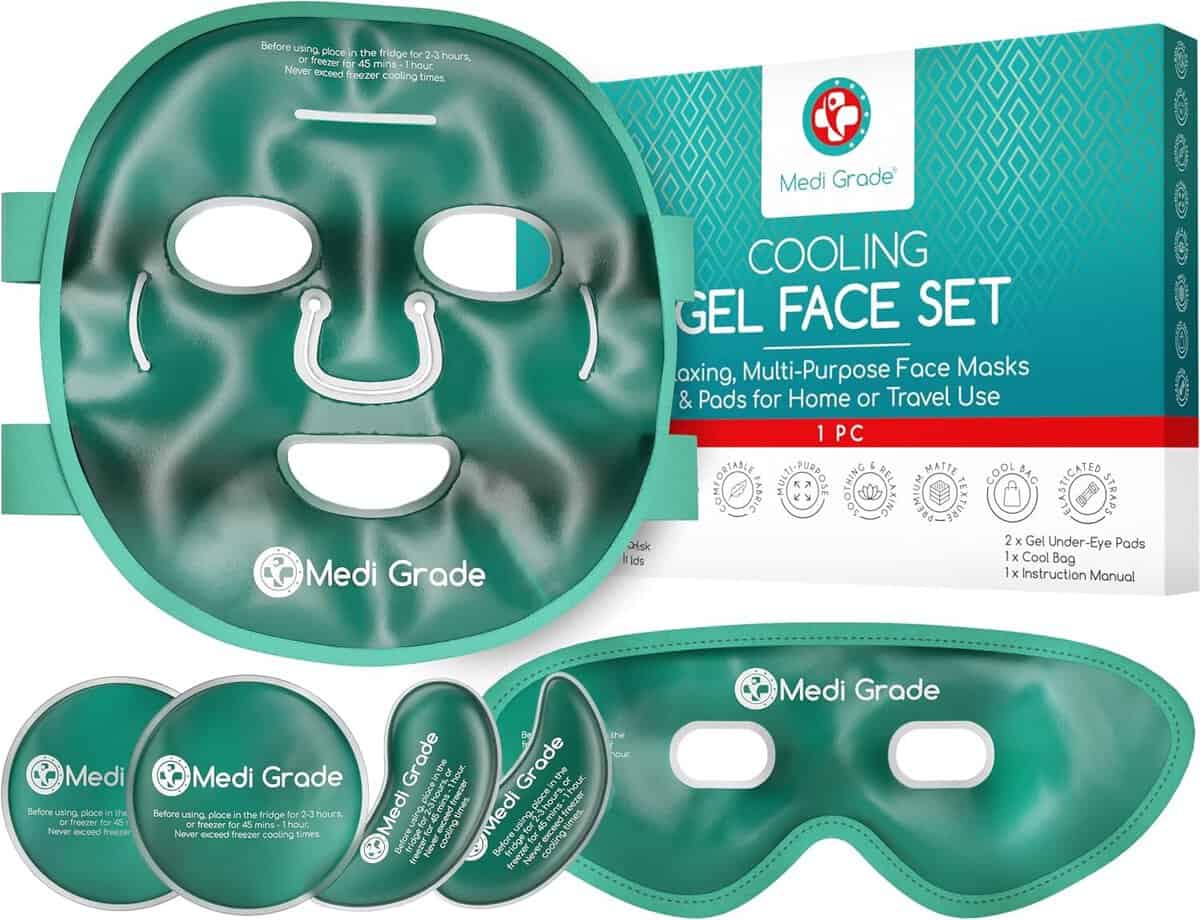
My cheap trick for facial flushing is a cooling gel face mask. I keep it in the fridge (fridge, not the freezer!) and use it after showers to calm the redness down, and in the morning because it wakes me up better than coffee does.
There are alot of these on Amazon and they don’t cost much, so you dont need anything special. Cold for the face isn’t just me being weird either. When the National Rosacea Society answered a question on menopause and flushing, it noted that some women counter hot flashes with cold compresses on the face, and that easing the flushing may help keep rosacea under control.
The best skincare for rosacea and aging skin (what I’d actually reach for)
Being 40-something with rosacea is a pain, because half the anti-aging aisle is built to fight your face.
Dermatologists at the AAD say to avoid products containing alcohol, camphor, fragrance and glycolic acid. Glycolic acid is in loads of “glow” and anti-wrinkle stuff, so that one catches people out.
So this is what I’d build around instead.
SPF, every single day. This is your anti-aging step and your rosacea step in one bottle. I use SPF 50 every day, and the NHS says to go for at least SPF 30. Sun is the big trigger for a lot of us too. In a National Rosacea Society survey of 1,066 people, 81 percent said sun exposure made their rosacea worse, which put it at number one. If chemical filters sting, the AAD suggests looking for zinc oxide, titanium dioxide or both, which is a mineral sunscreen. I’ve read the labels on a load of them in my Korean sunscreen guide.
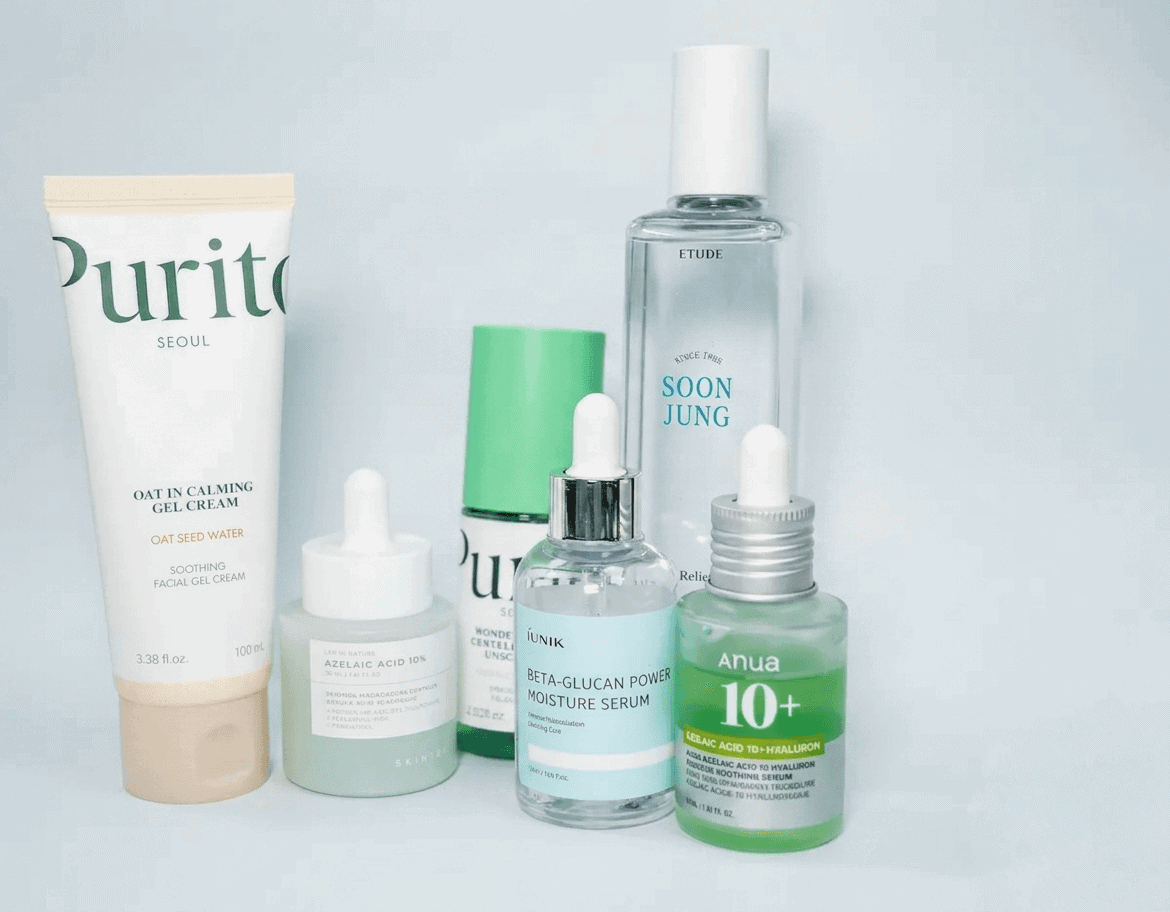
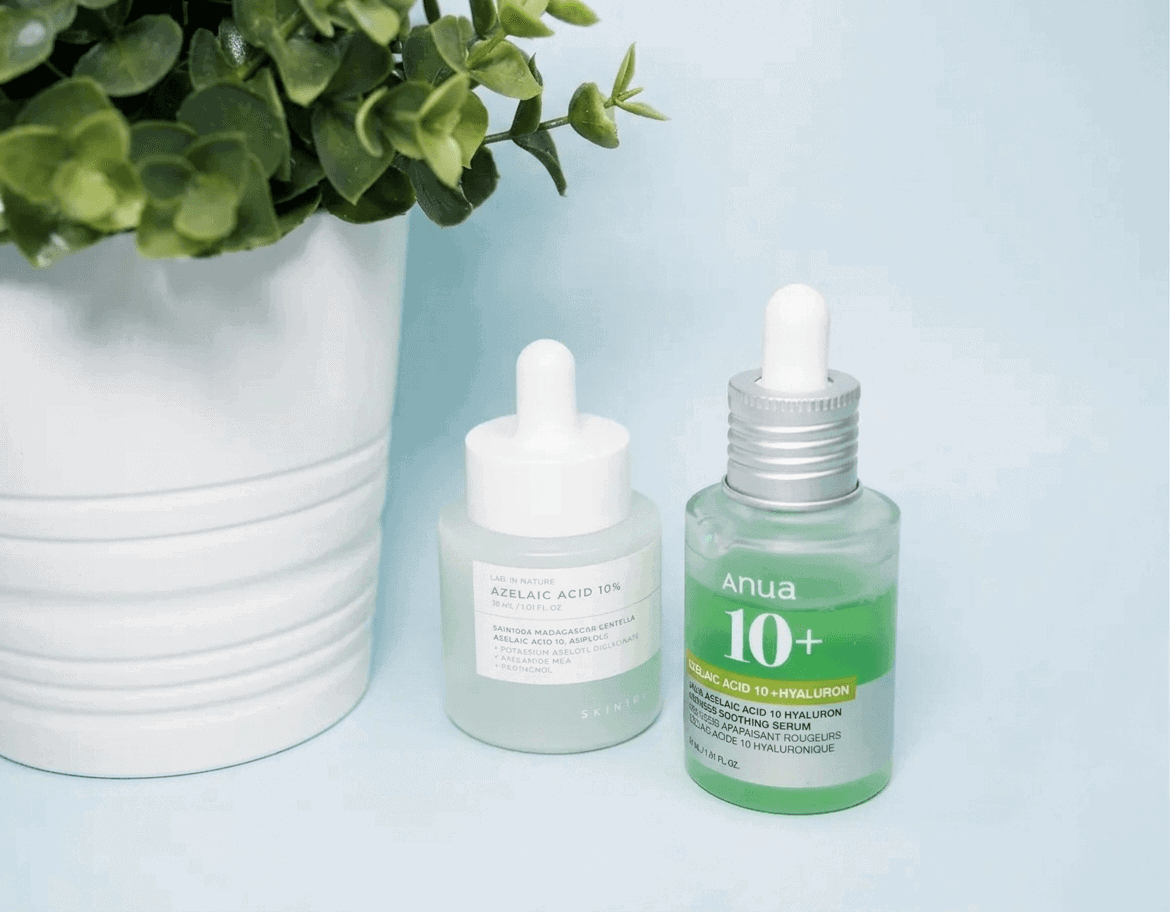
Azelaic acid. I use it every day, and it’s the one I notice when I stop. It’s on the AAD’s list of treatments for rosacea’s acne-like breakouts, and the same page says it may reduce long-lasting redness too. It’s also kind to a stressed-out barrier. A small 2008 study by dermatologist Dr Zoe Draelos tested azelaic acid 15% gel on people with rosacea and found it didn’t damage the skin barrier at either once- or twice-daily use. If you’re picking an over-the-counter one, I compared two in Anua vs SKIN1004 azelaic acid.
Niacinamide. In a 2005 study, 50 people with rosacea used a niacinamide moisturizer twice a day for 4 weeks. Their barrier function and hydration improved, and both the dermatologist and the people themselves saw their rosacea improve. It was small, though, and it tested a whole moisturizer, so it’s hard to say how much was the niacinamide.
A moisturizer, even if you’re oily. The AAD says moisturizer is essential whether rosacea makes your skin dry or oily. I have combination skin and I still never skip it.
Barrier support. I look for ceramides, beta-glucan and centella in my moisturizers. In a small 2026 trial, 75 people with redness-type rosacea took the antibiotic minocycline, and the ones who also used a moisturizer with centella, ceramide NP and panthenol twice a day saw their redness and hydration improve more over 28 days than the control group. I couldn’t find a rosacea study on beta-glucan, so that one is just my preference.
Retinoids, carefully. They’re the big anti-aging ingredient, and they’re also the one rosacea skin argues with most. If you want one, I’d wait until your redness is calm, go slow, and get your GP or a dermatologist involved.
Before you buy anything, paste the ingredient list into my skin ingredient checker. Run it through the Rosacea tab, then the Anti-ageing tab, and you’ll see which bits help and which might set you off. If you want actual product picks for your 40s, my post on Korean skincare for mature skin has my full routine, and the 10 Korean skincare products that helped my rosacea are the ones I’ve used for years.
Ocular rosacea: the part that did get worse for me
This is the one I really want you to hear. My skin settled into a pattern. My eyes didn’t. My ocular rosacea got worse with age, and if you’re facing the same thing, please go and see your GP.
It’s more common than people think. A 2024 systematic review found estimates of eye involvement range from 6% to 72% of people with rosacea. And a review in Current Opinion in Ophthalmology describes ocular rosacea as underappreciated and warns it can cause permanent vision loss if it isn’t treated properly. I mention it because “my eyes are a bit gritty” is easy to ignore, and it shouldn’t be.
The NHS lists sore eyelids or crusts around the roots of your eyelashes, which could be blepharitis. And if you have rosacea and your eye is painful, your vision is blurred, you’re sensitive to light, you have a red eye or your eye feels gritty, the NHS says ask for an urgent GP appointment or call 111. These could be signs of keratitis, which can be serious if it isn’t treated urgently.
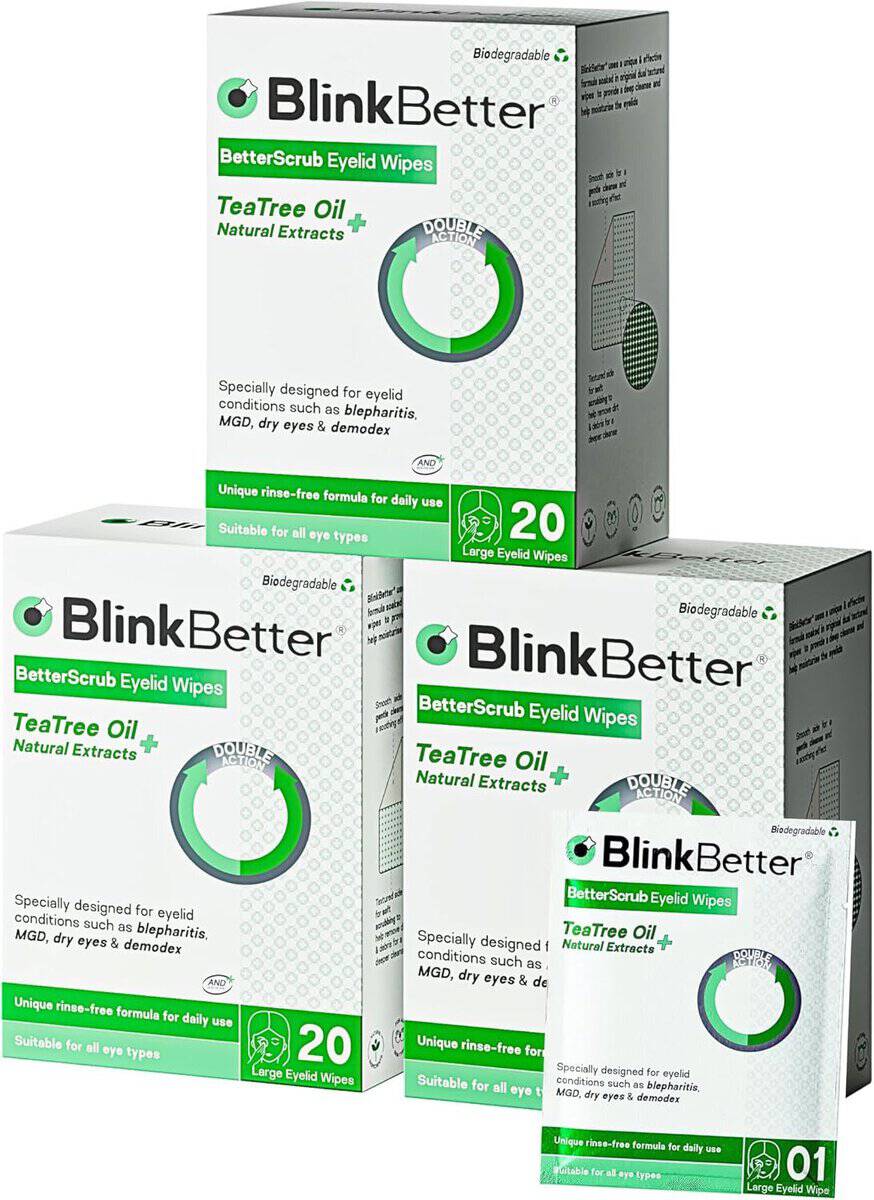
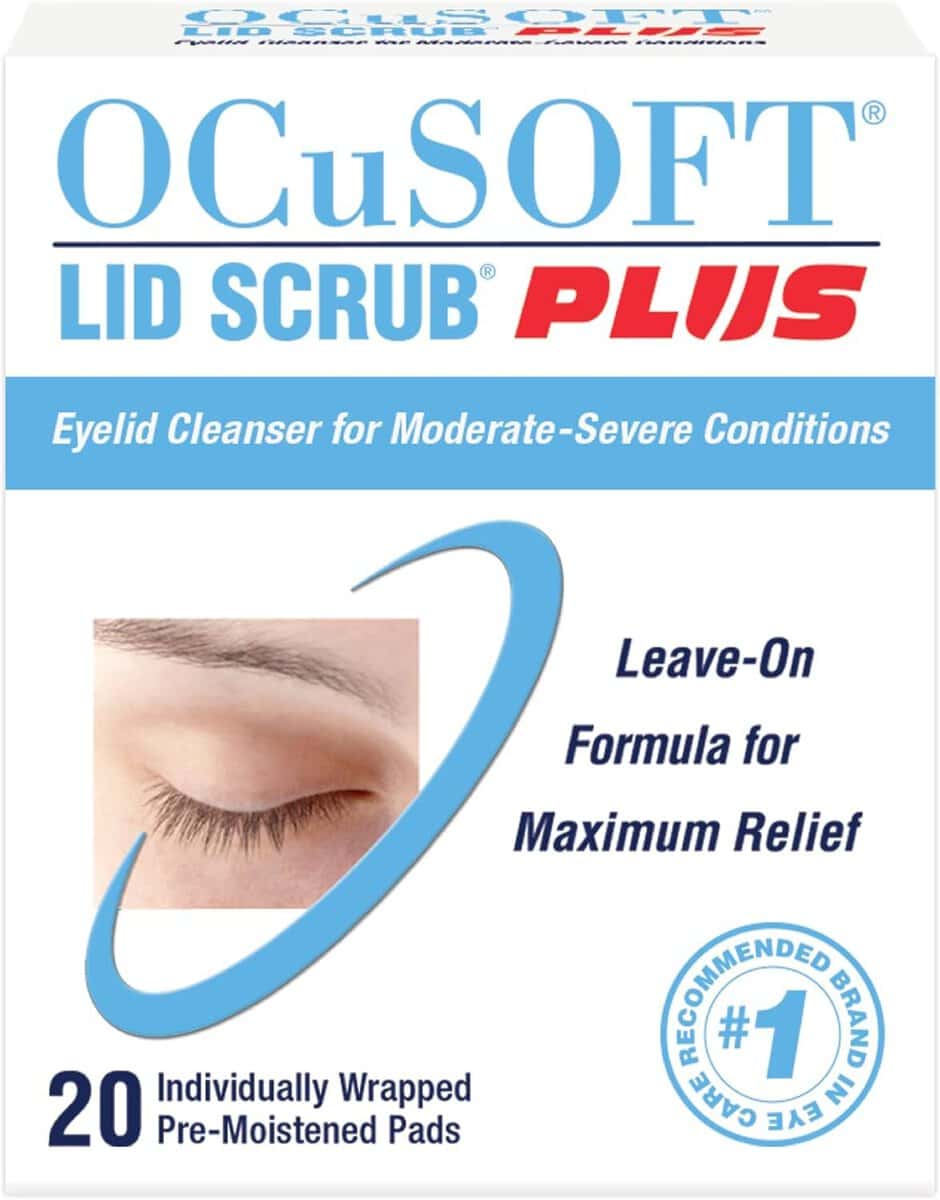
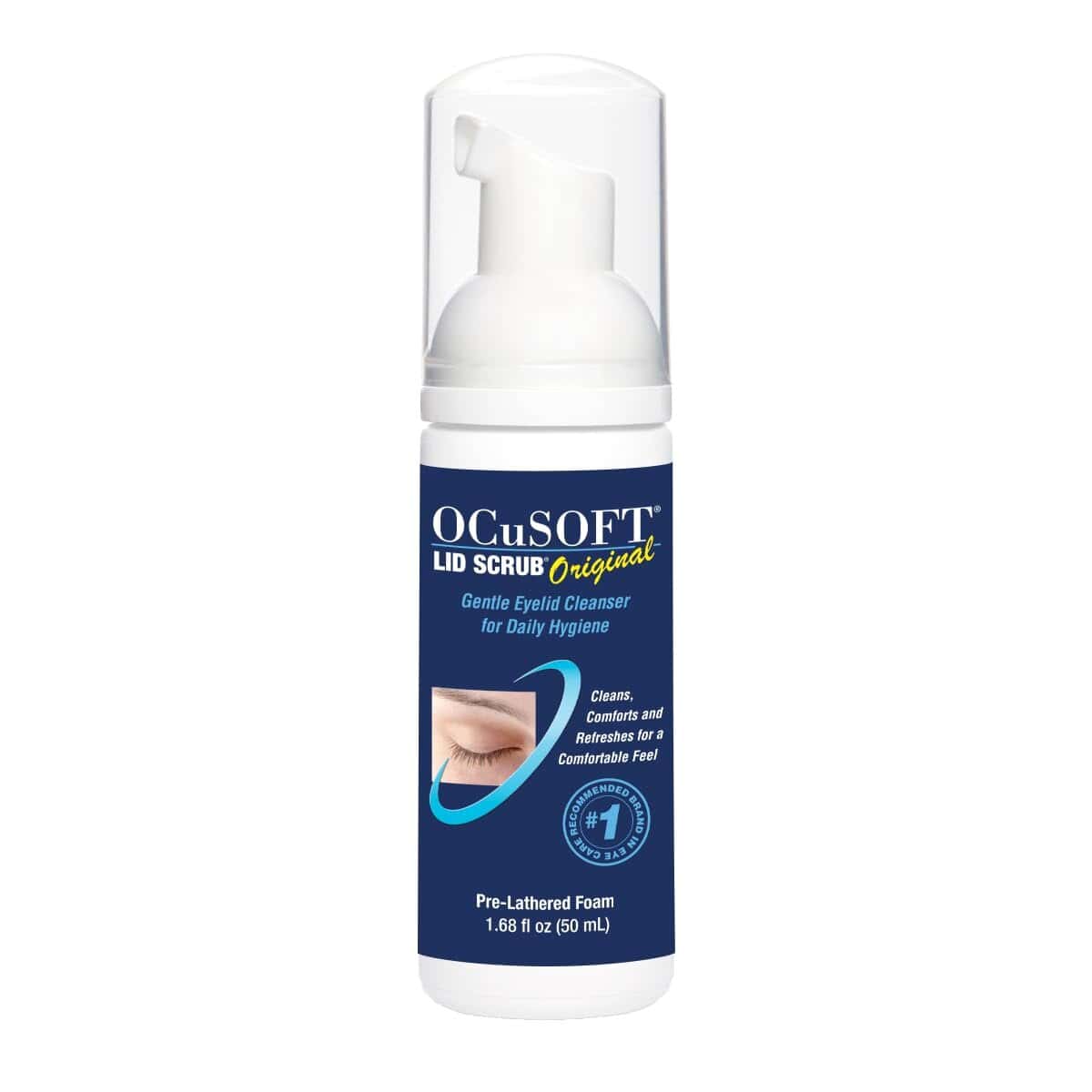
For the everyday stuff, warm compresses and lid wipes have been a godsend for me, plus eye drops for dry eyes. That’s pretty much what NHS eye clinics tell people too. One NHS leaflet says a regular eyelid hygiene routine is essential, and to clean your eyelids every day whether or not you have symptoms. I’ve used OCuSOFT’s Lid Scrub Plus wipes and their Lid Scrub Foam for that too.
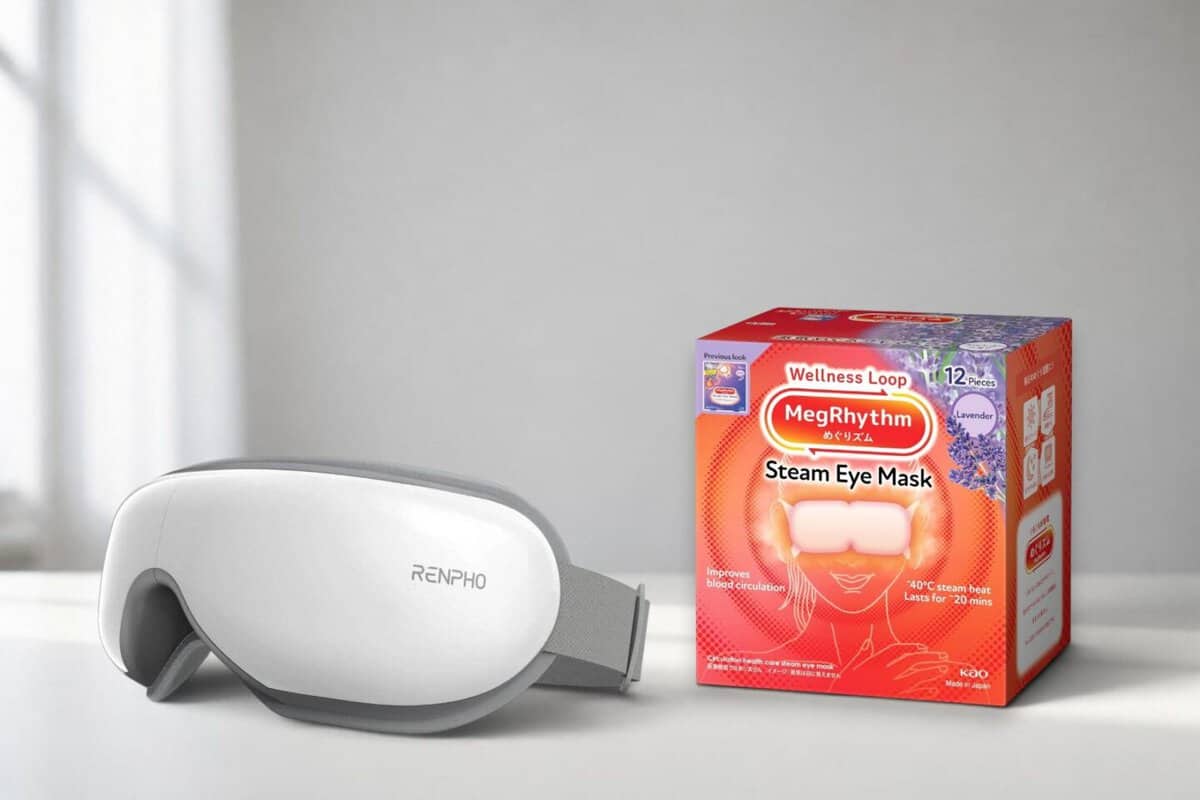
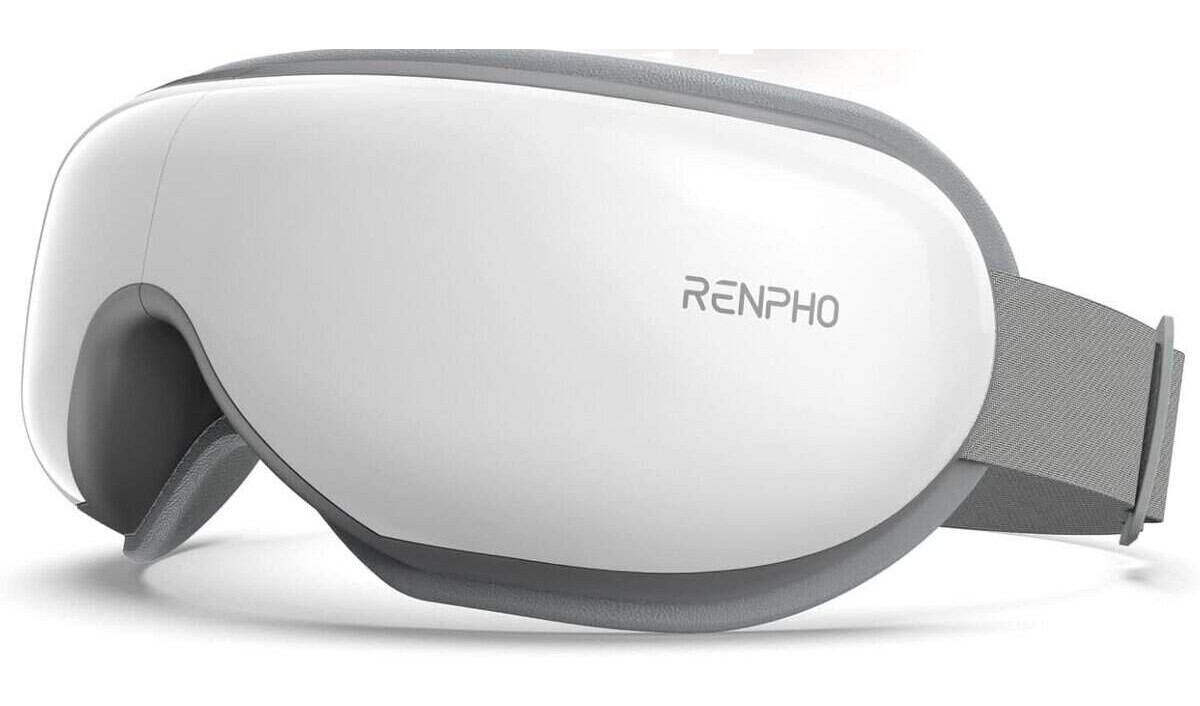
I ended up ordering a wireless heated eye mask, and I love it. I use it every day. Heated eye masks get a mention in NHS leaflets too. Royal Berkshire’s says they’re available at pharmacies, and Manchester’s says to clean the mask before and after use and to follow the maker’s guidelines carefully so you don’t burn your skin.
For travel, or when I can’t be bothered charging anything, I use Japanese self-heating MegRhythm steam eye masks. You open the pouch and they warm up by themselves. One tip from Kao, the brand behind them: don’t use one straight after putting your eye drops in.
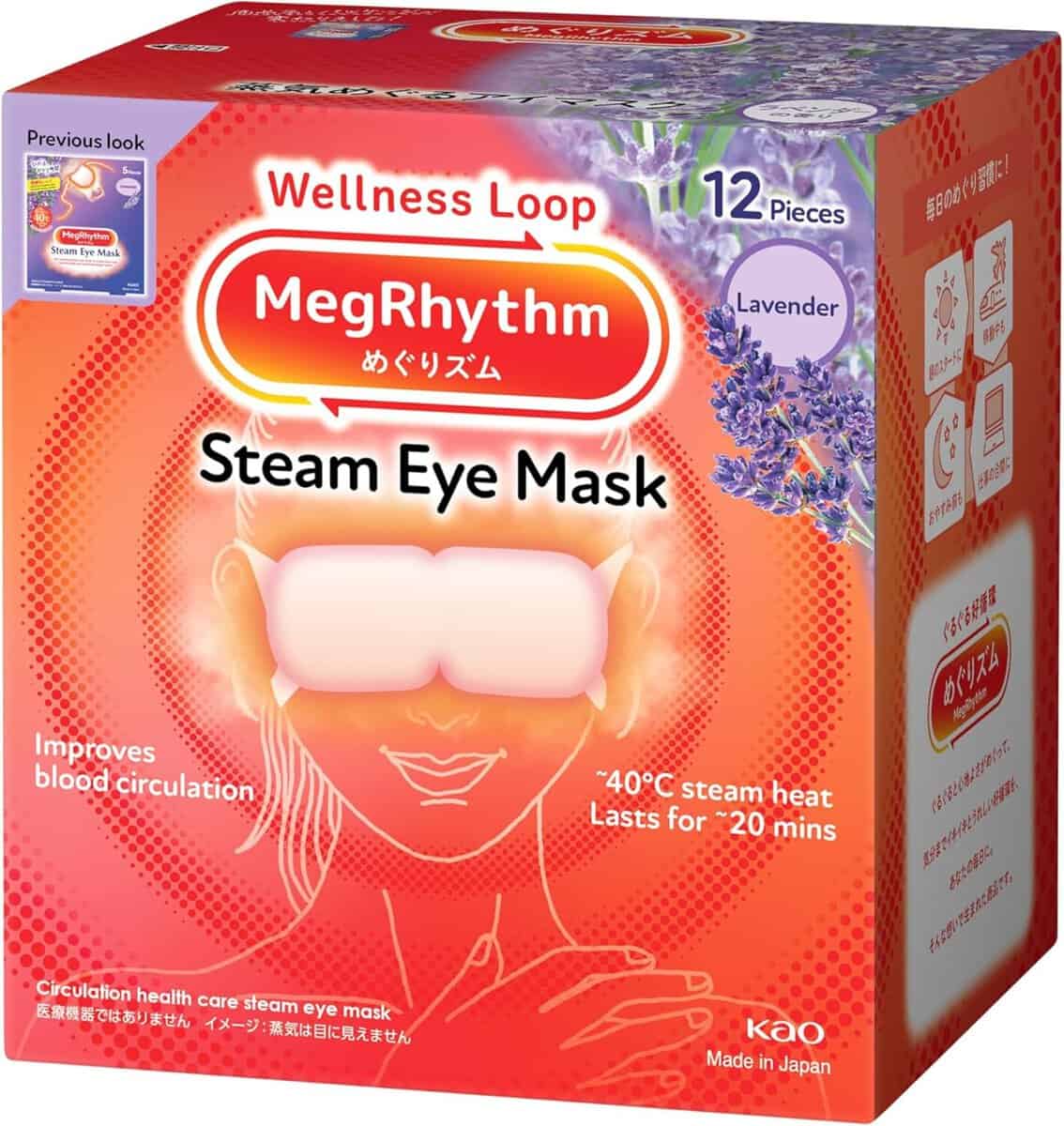
Buy the MegRhythm steam eye masks▾Tap to see where to buy
Worldwide
- Buy Me JapanCode
- YesStyle12-pack, pick Lavenderin linkCode
- STYLEVANA5 or 12-pack, pick LavenderCode
- Olive Young (not the US)Lavender 5-packin linkCode
UK & US
Tap a code to copy it. The ones marked in link are added for you when you click through. Most of these shops list several scents on one page, so pick lavender if you want the one I use.
Hygiene isn’t the whole answer, though, and it’s worth knowing that. In that same 2024 review, lid hygiene on its own helped 65% of patients, while topical antimicrobials and oral antibiotics helped around 9 in 10. So if your routine isn’t cutting it, that’s your sign to go back to your GP.
When I’d stop DIY-ing and see a GP
Skincare can do a lot for the day-to-day, but it has limits. The NHS says a GP may suggest prescription creams and gels, or antibiotics for 6 to 16 weeks, and may refer you to a dermatologist if treatments aren’t working.
Given that Finnish study, I’d go in and say the word “rosacea” out loud. Mention your eyes too, even if they feel like a separate thing. They might not be.
Where to buy everything, and my discount codes
I bought everything in this post myself. All my codes live on my discount codes page. For skincare, my LOOKFANTASTIC discount code LFTFNEVEEN gets you up to 25% off, and my Dermatica discount code NEVEEN50 is there if you want prescription treatment that can include azelaic acid. For the MegRhythm masks, my Buy Me Japan discount code NEVEENWOOD takes 10% off your order. YesStyle and Olive Young add my codes through the links below, and STYLEVANA takes INF10NEVE at checkout.
Worldwide
- Buy Me JapanKao MegRhythm steam eye masksCode
- YesStyleKao MegRhythm steam eye masks, 12-packin linkCode
- STYLEVANAKao MegRhythm steam eye masks, 5 or 12-packCode
- Olive YoungKao MegRhythm steam eye masks, 5-pack. Ships worldwide, except the USin linkCode
UK & US
- AmazonMedi Grade cooling gel face mask
- AmazonRENPHO heated eye mask
- AmazonKao MegRhythm steam eye masks, lavender
- AmazonBlinkBetter eyelid wipes
- AmazonOCuSOFT Lid Scrub Plus wipes
- AmazonOCuSOFT Lid Scrub Foam
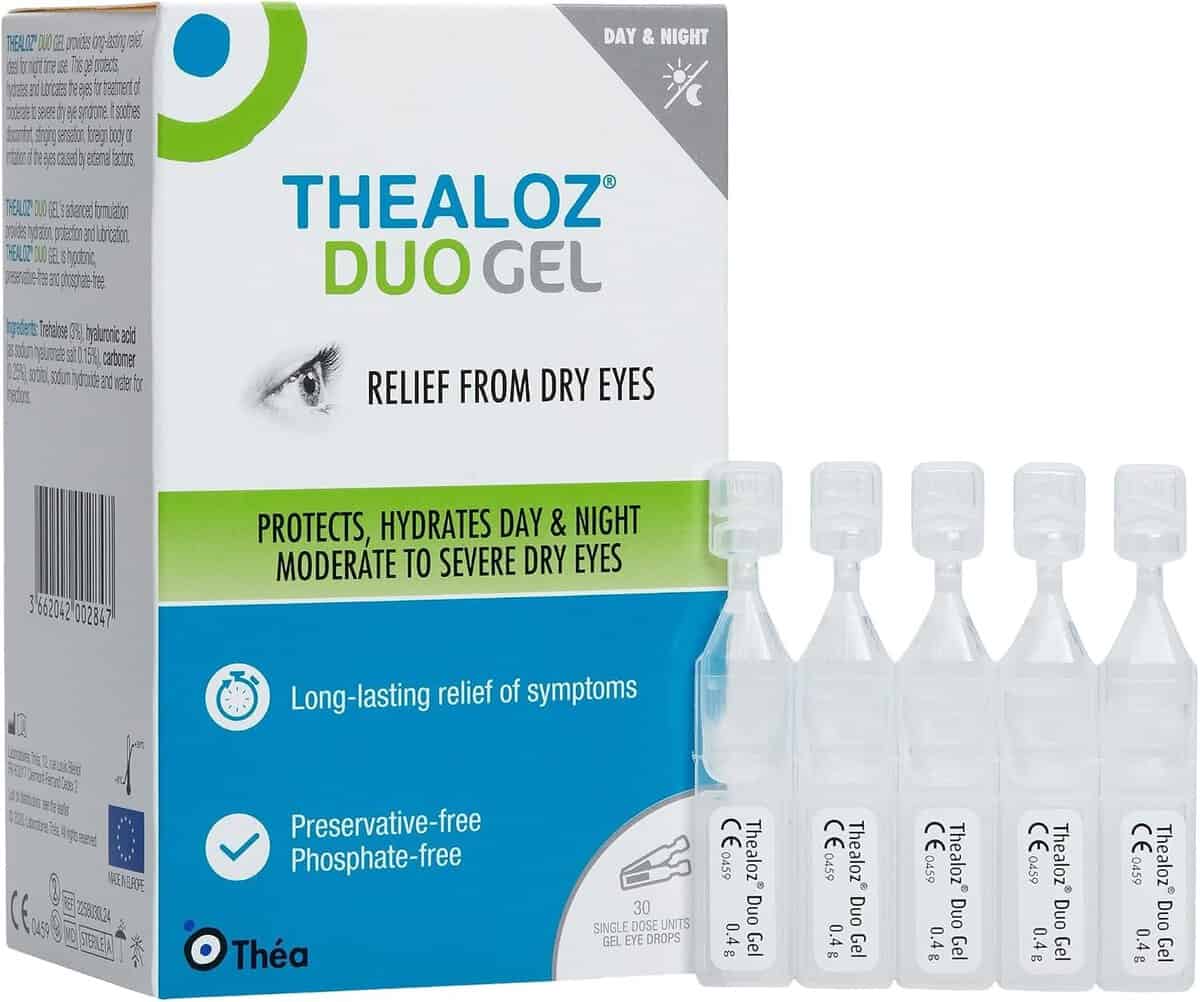
- AmazonThealoz dry eye drops
Tap a code to copy it. The ones marked in link are added for you when you click through. Most of the MegRhythm shops list several scents on one page, so pick lavender. US shoppers are sent to the same product on Amazon US.
FAQ
Does rosacea get worse with age?
It can, but not for everyone, and not in every way. The NHS says rosacea can get worse if it isn’t treated, and the National Rosacea Society says new symptoms can appear years after it starts. My flushing stayed the same, but broken capillaries and my eye symptoms got worse.
Does ocular rosacea get worse with age?
Mine did. Eye symptoms like grittiness and sore lids can creep in years after skin symptoms start, and ocular rosacea can affect your sight if it isn’t treated. If your eyes are painful, red, blurry or sensitive to light, the NHS says get an urgent GP appointment or call 111.
Do broken capillaries from rosacea go away?
Not on their own, in my experience. The NHS says rosacea can cause tiny broken blood vessels that don’t go away, and the British Association of Dermatologists says laser therapy can treat them. Being gentle with your skin and wearing SPF helps stop new ones.
Does menopause make rosacea worse?
For a lot of women, it seems to. The National Rosacea Society says recent studies link perimenopause with both new rosacea and worse symptoms, and hot flashes can set off flushing.
What is the best skincare for rosacea and aging skin?
Daily SPF 30 or higher and a gentle, fragrance-free moisturizer are my base, with calming actives like azelaic acid and niacinamide on top. Skip glycolic acid and anything fragranced. I check every new product in my free rosacea ingredient checker first.
Is mild rosacea worth treating?
Yes, in my opinion. Mild is the easiest stage to keep under control, and the NHS says untreated rosacea can get worse over time.
What’s the difference between type 1 and type 2 rosacea?
Type 1 is the flushing and redness kind, often with visible broken blood vessels. Type 2 adds bumps and pus-filled spots on the middle of the face that can look like acne, but without blackheads. The National Rosacea Society says type 2 is often seen alongside type 1, or after it. I have type 1.
I bought everything in this post myself. Affiliate links, I earn commission if you use my code.
Sources (tap to see the research behind this post)
- NHS, Rosacea (symptoms, triggers, treatment, eye warning signs)
- Hull University Teaching Hospitals NHS Trust, Blepharitis patient leaflet
- Manchester University NHS Foundation Trust, Blepharitis patient leaflet
- Royal Berkshire NHS Foundation Trust, Blepharitis patient leaflet
- Draelos ZD, Ertel K, Berge C. Niacinamide-containing facial moisturizer improves skin barrier and benefits subjects with rosacea. Cutis, 2005 (PubMed)
- Avraham S et al. Treatment of ocular rosacea: a systematic review. J Dtsch Dermatol Ges, 2024 (PubMed)
- Redd TK, Seitzman GD. Ocular rosacea. Curr Opin Ophthalmol, 2020 (PubMed)
- Lohani D, Marson JW, Baldwin HE. Rosacea in Patients with Skin of Color: Diagnosis and Management. Am J Clin Dermatol, 2026 (PubMed)
- Jäntti J et al. Rosacea is an underdiagnosed disease among subjects aged over 70 years. J Am Geriatr Soc, 2025
- Draelos ZD. Effects of azelaic acid 15% gel on skin barrier in rosacea. Cosmetic Dermatology, 2008
- British Association of Dermatologists, Rosacea patient information leaflet
- American Academy of Dermatology, Rosacea skin care tips, Rosacea treatment: acne-like breakouts and Lasers and lights: how well do they treat rosacea?
- Jiang X et al. Effectiveness and safety of a moisturizer containing Centella asiatica extract, ceramide NP and panthenol for erythema and skin barrier in erythematotelangiectatic rosacea: a randomized controlled trial. Skin Res Technol, 2026 (PubMed)
- National Rosacea Society, New Survey Pinpoints Leading Factors That Trigger Symptoms and First Standard System Introduced for Diagnosis and Study of Rosacea (the rosacea subtypes)
- National Rosacea Society, The Impact of Age on Rosacea and Rosacea in Older People
- National Rosacea Society, Perimenopause May Mark Rosacea’s Onset or Worsening (October 2026)
- National Rosacea Society, Medical Conditions May Cause Flare-ups, Q&A: Menopause and Lasers Offer Key Treatment Options
- Kao, MegRhythm Steam Eye Mask (how to use and cautions)

Google will show you more of my posts when you search, AI answers included. One tap, and you can undo it any time.